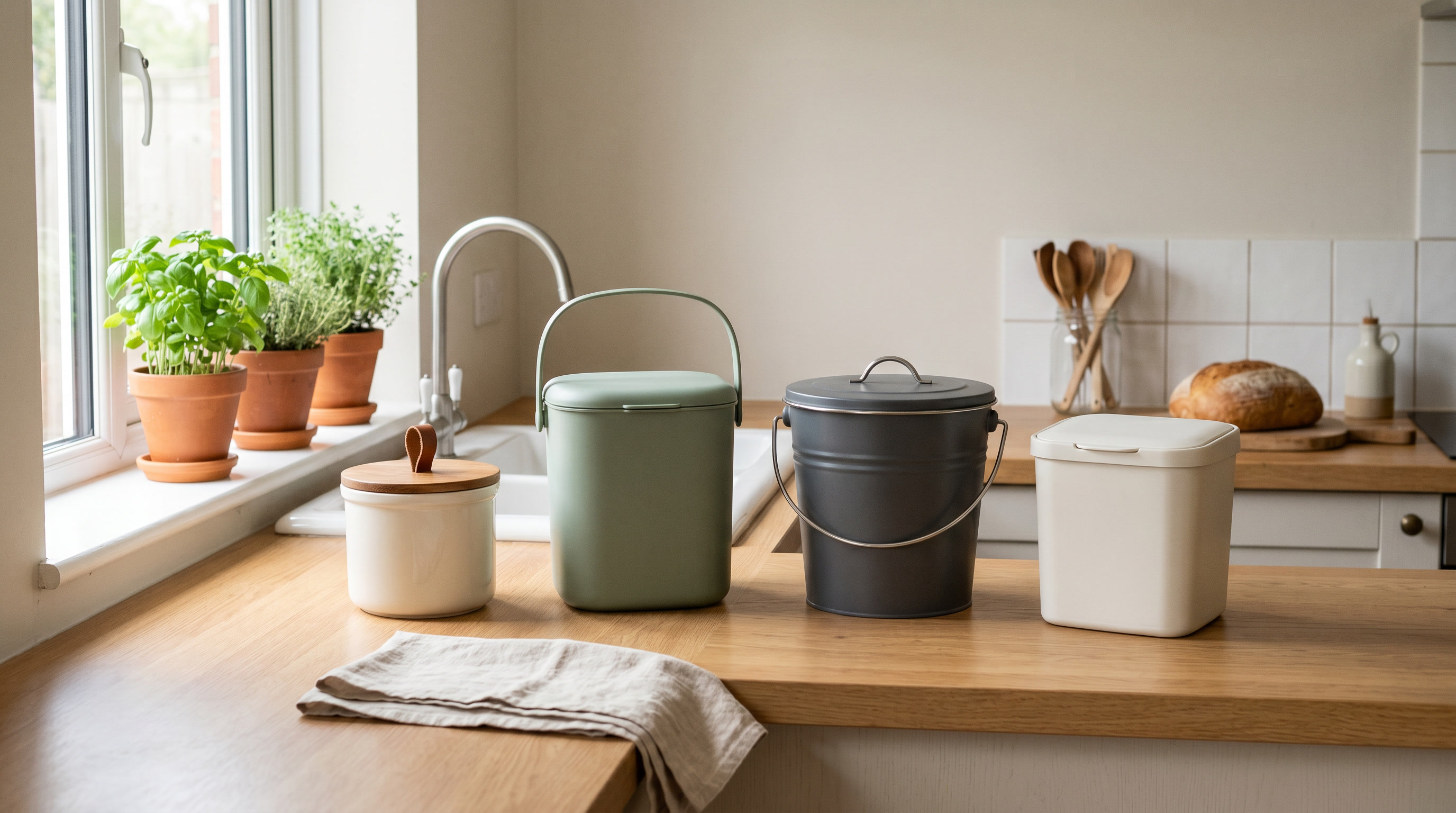
Composting in a flat can work, but the right option depends on your space, routine, and tolerance for maintenance. Many beginners jump straight to a complex system when a simpler option would be cleaner and easier.
This guide focuses on realistic UK flat options, not idealised setups. The goal is to reduce waste in a way you can maintain week after week.
Start with the easiest option first
Before buying equipment, check what your council or building already supports. If food-waste collection exists, that is often the cleanest and most reliable baseline.
If you still want an at-home system, decide whether your main goal is:
- Reducing bin odour
- Reducing general waste
- Producing compost-like output for pots
- Learning a circular routine for your own growing
Each goal suits a different method.
Option 1: Food-waste collection (lowest effort)
For many flat dwellers, council food-waste collection is the most practical route:
- Minimal setup
- Low indoor odour when managed well
- No balancing of brown/green materials at home
- Reliable even in winter
You may still keep a small kitchen caddy, but heavy processing happens off-site.
Option 2: Bokashi-style system (good for small kitchens)
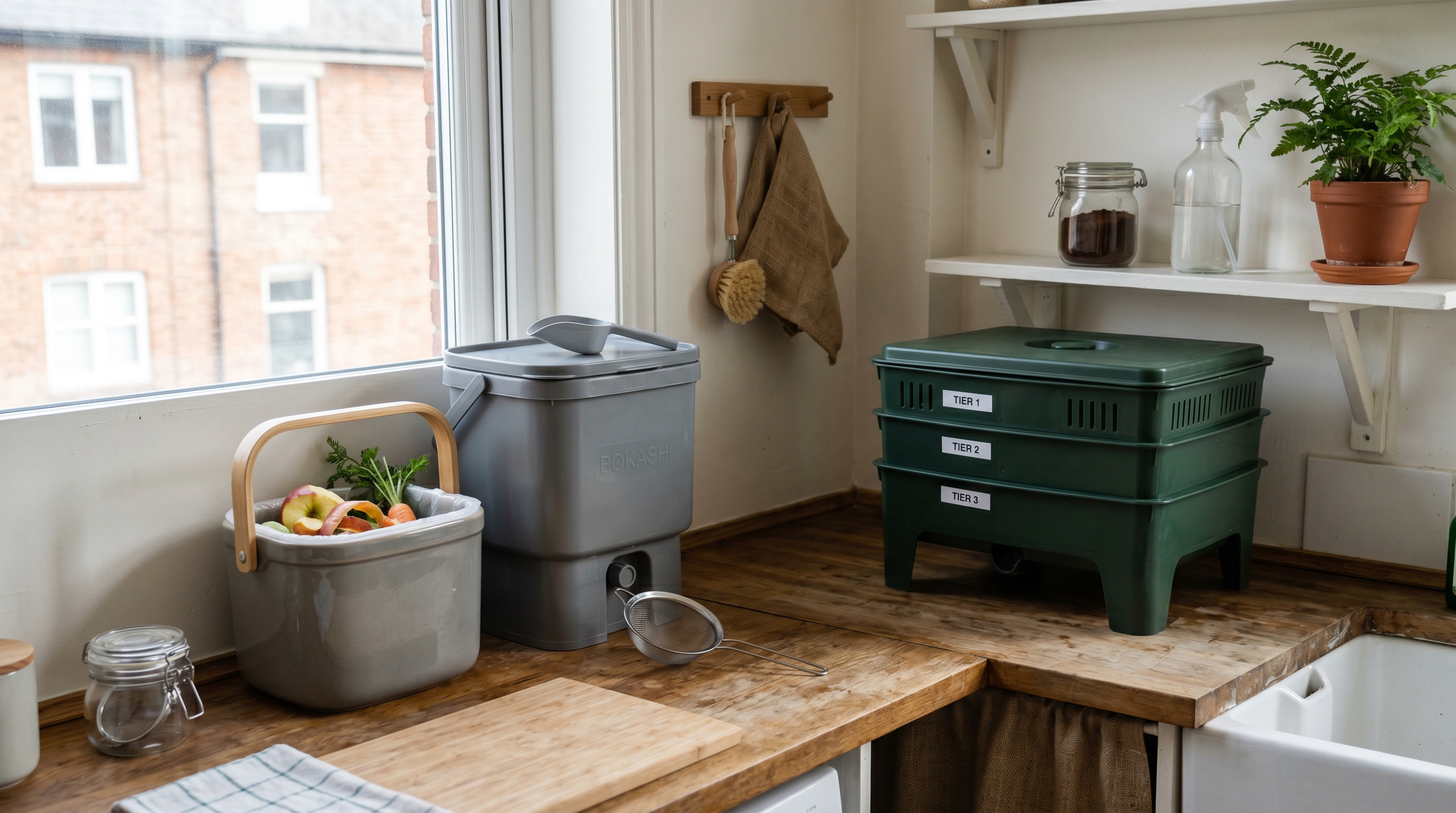
Bokashi systems ferment food scraps in a sealed bucket. They are often easier in flats than traditional open composting because they are contained and compact.
Strengths:
- Small footprint
- Handles mixed kitchen scraps
- Usually cleaner than open bins indoors
Trade-offs:
- Ongoing routine needed
- You still need a plan for the fermented output (for example, transferring to outdoor soil/composting route where suitable)
Option 3: Wormery (works for some, not all)
Small wormeries can work in flats, but only when monitored consistently.
Strengths:
- Can process scraps steadily
- Produces useful castings over time
Trade-offs:
- Sensitive to overfeeding and poor balance
- Needs regular checks
- Not ideal if your routine is unpredictable
If you often travel or miss weekly tasks, choose a simpler method first.
Option 4: Indoor caddy + external compost drop-off
This is a practical middle ground:
- Keep a sealed caddy indoors
- Empty regularly at a community compost site, allotment, shared garden agreement, or other legitimate local route
It keeps indoor handling simple while still supporting composting outcomes.

What is usually unrealistic in a flat
- Large open compost heaps indoors
- High-volume processing from a very small household
- Systems that depend on daily perfect maintenance
- Storing messy, wet scraps in warm rooms for too long
Realistic composting in a flat is about controlled flow, not maximum volume.
A practical decision framework
Use this order:
- What collection options are already available locally?
- How much indoor space can I give this?
- How consistent is my weekly routine?
- Do I need output for pots now, or mainly waste reduction?
- Can I keep this clean and low-odour in a shared home?
If the answer to steps 3 or 5 is uncertain, start simpler.
Smell and mess control basics
- Empty caddies frequently
- Keep lids sealed when not in use
- Avoid leaving wet scraps for long periods in warm kitchens
- Clean containers on a schedule
- Use liners or newspaper where appropriate for easier cleaning
Avoid advice that suggests risky indoor storage or improvised systems without containment. In flats, hygiene and airflow matter as much as compost output.
Flat-specific renter cautions
This guide is practical advice, not legal advice. For rented homes:
- Check tenancy/building rules before placing shared-area bins or external units
- Keep communal walkways clear
- Avoid leakage in hallways, balconies, or shared access points
- Use trays and sealed containers to reduce nuisance risk
How composting links to container gardening
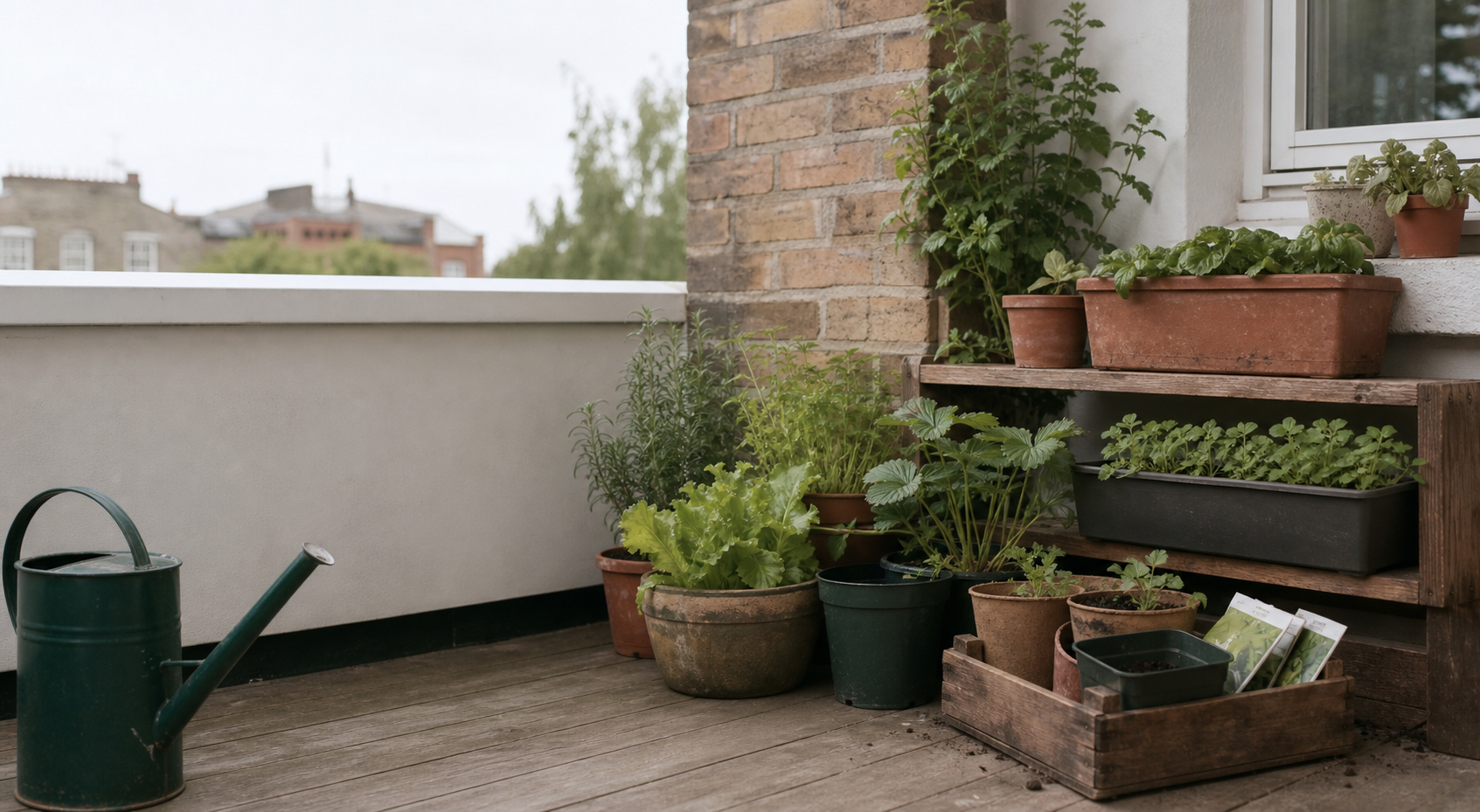
If you grow in pots, composting should support your setup, not complicate it. Start with a routine that fits your current container scale.
For most beginners:
- Focus first on reliable watering and crop matching
- Add composting only when your base growing routine is stable
Use Container Gardening for Beginners: A UK Small-Space Guide for system planning and How Often Should You Water Plants in Pots in the UK? for care consistency.
Common mistakes
Starting with the most complex method
Beginners often choose a high-maintenance system first, then quit.
Keeping scraps too long indoors
This creates avoidable smell and pests.
Expecting large compost output quickly
Flat systems are usually lower volume by design.
Ignoring routine fit
A good system on paper fails if it does not match your week.
If you are comparing caddies, bokashi bins or other small-space supplies, the small-space gardening kit list gives a practical overview of what may help.
FAQ
Is composting in a flat actually practical?
Yes, if you choose the method that fits your space and routine.
What is the easiest option for beginners?
Food-waste collection plus a sealed caddy is usually easiest.
Are wormeries good for flats?
They can be, but only with consistent management.
Can I compost everything indoors?
No system handles everything equally well. Keep expectations realistic.
Should I buy a dedicated indoor compost bin immediately?
Only if you know you will maintain it and it solves a clear need.
Related guides
- Indoor Compost Bins: What to Know Before Buying One
- How Often Should You Water Plants in Pots in the UK?
- Cheap Ways to Start Gardening as a Renter
- Container Gardening for Beginners: A UK Small-Space Guide
Next step
If you are unsure what to buy, read Indoor Compost Bins: What to Know Before Buying One and choose a low-maintenance option first.