Watering plants in pots is one of the trickiest parts of small-space gardening. UK weather can swing from cool rain to warm wind in the same week, and containers respond much faster than garden soil. A pot can be soaked after rain, then dry out quickly when sun and wind return.
There is no perfect watering timetable. The best habit is learning how to check the compost and read the plant. This guide is for herbs, vegetables and edible plants in pots on windowsills, balconies, patios and small rented spaces.
Why pots dry differently from garden soil
Plants in the ground can send roots wider and deeper. Plants in pots rely on the limited compost inside the container. That compost heats, cools, dries and rewets quickly.
Small pots dry faster than large pots. Terracotta dries faster than plastic. Windy balconies dry pots faster than sheltered patios. Sunny windowsills can dry small herbs quickly, especially above radiators.
If you are new to container growing, the Beginner’s Guide to Small-Space Gardening for UK Renters explains why watering is so central to small-space gardening.
The finger test
Push a finger into the top few centimetres of compost. If it feels dry below the surface, water. If it still feels damp, wait.
This is simple, but it is better than guessing. The surface can look dry while the lower compost is still moist. The opposite can also happen if water runs down the sides of a very dry pot without soaking the middle.
For larger pots, also lift or tilt the pot slightly if you can do so safely. A dry pot feels much lighter than a wet one.
How often to check pots
In summer, check small outdoor pots daily. You may not need to water every day, but you should know whether the compost is drying.
In spring and autumn, checking every couple of days may be enough for many pots. In winter, many plants need much less water because growth is slow and compost stays damp longer.
Indoor herbs vary. A basil pot on a sunny warm sill may dry quickly. Parsley in a cooler room may need less frequent watering.
Watering different spaces
Windowsills
Indoor plants rely entirely on you. Rain will not help. Use pots with drainage holes and saucers or cover pots to protect the sill.
Water slowly, let excess water drain, then empty standing water from the saucer or cover pot. Many windowsill herbs suffer because they sit in water after watering.
Balconies
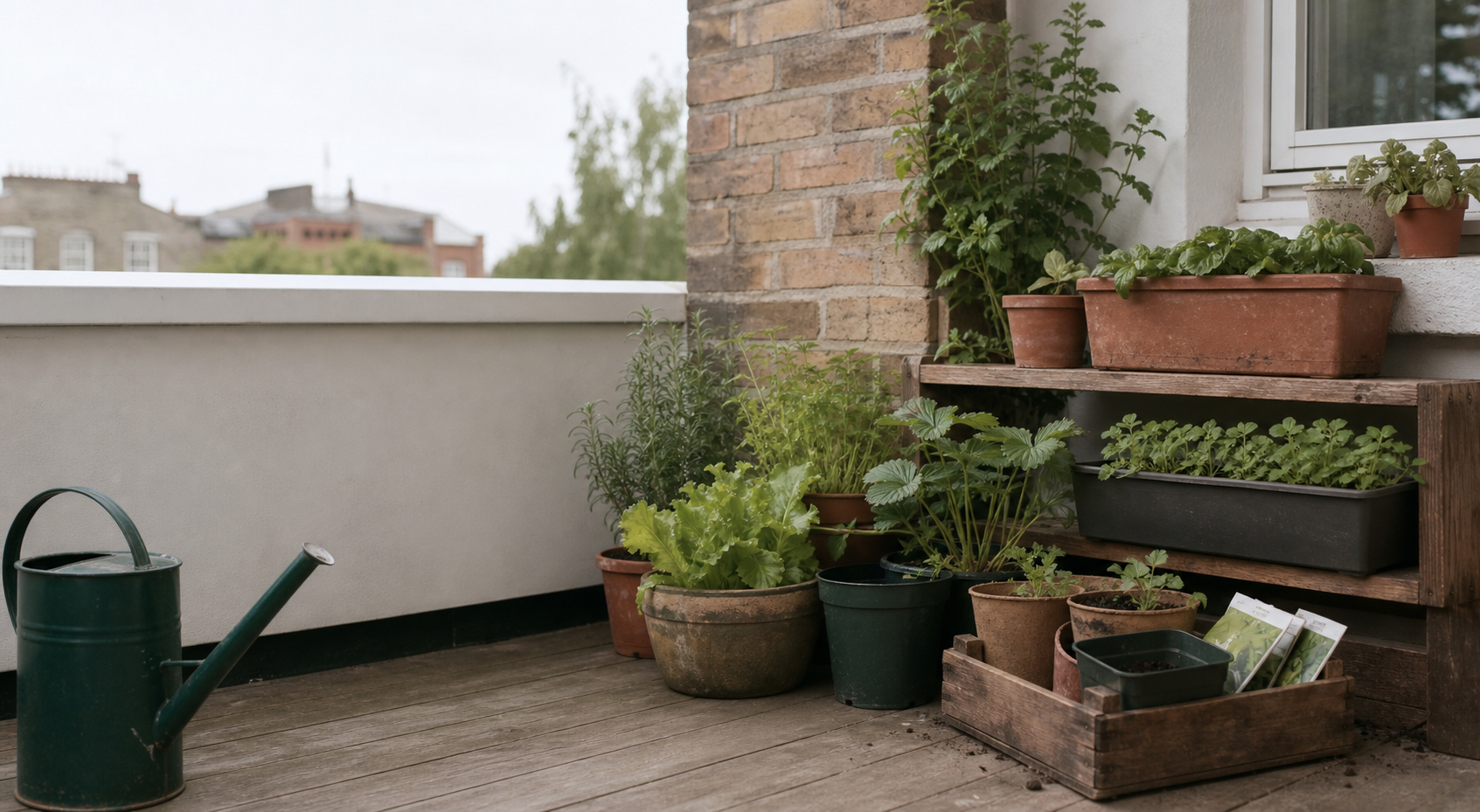
Balcony pots may not receive much rain, even outdoors. Overhangs, walls and wind can keep compost dry. Wind also increases water loss.
During breezy spells, check more often. If wind is a regular problem, read How to Protect Balcony Plants from Wind.
Patios
Patio pots are often easier to water, but paving and walls can create warm dry pockets. Pots against brick or concrete may dry quickly in summer.
Large patio containers hold moisture longer, but they still need checking during hot weeks.
Watering different crops
Herbs
Parsley, chives and mint prefer steadier moisture. Rosemary and thyme prefer freer drainage and dislike sitting wet.
For windowsill herbs, read Best Herbs to Grow on a Windowsill in the UK.
Salad leaves
Salad leaves need consistent moisture. If they dry repeatedly, growth slows and leaves can become tough or bitter. Shallow troughs dry faster than deeper pots.
Tomatoes and chillies
Fruiting crops need steady watering. Letting them dry severely, then soaking them, can stress the plant. They also need larger pots than herbs.
Seedlings
Seedlings need careful watering because they have small roots. Keep compost moist but not soggy. A gentle rose on a watering can or bottom watering can help avoid washing seeds away.
How to water well
Water slowly until the compost is evenly moist. In a dry pot, water may run straight through cracks or down the sides. If that happens, water in stages and give the compost time to absorb moisture.
Aim water at the compost rather than soaking leaves. Wet leaves are not automatically a problem, but damp crowded foliage can encourage issues, especially indoors or in cool weather.
Morning is often a good time to water outdoor pots. Plants start the day hydrated, and surfaces have time to dry before night.
If water immediately runs out of the bottom of a very dry pot, wait a few minutes and water again. Dry compost can repel water at first.
Saucers and trays
Saucers protect rented surfaces and stop water dripping where it should not. They are useful, but they need managing.
Indoors, empty saucers or cover pots after watering. Outdoors, check trays after heavy rain. Some thirsty plants may use water from a tray in hot weather, but many plants dislike sitting wet for long periods.
For container setup, read How to Choose Pots for Balcony and Windowsill Gardening.
Signs of underwatering
Underwatered plants may wilt, have dry compost pulling away from the pot edge, feel very light, or develop crispy leaf edges.
Some plants wilt temporarily in hot sun even when compost is damp. Check the compost before assuming they need more water.
Signs of overwatering
Overwatered plants may have yellowing leaves, soggy compost, fungus gnats indoors, or limp growth despite wet soil.
Overwatering is common in decorative cover pots because standing water is hidden.
Self-watering options
Self-watering pots can help, but they do not remove the need to check plants. Reservoirs can run dry in warm weather or keep unsuitable plants too wet.
For a buyer-style overview, read Best Self-Watering Herb Pots in the UK. If you prefer DIY, see DIY Self-Watering Planter from Bottles.
Useful watering tools
Most watering judgement still comes from checking the compost and plant, but a few small tools can help beginners build a better routine. The small-space gardening kit list compares watering kit alongside pots, labels and seed-starting supplies.
- Moisture meter: Compare options on Amazon
- Watering spikes: Check options on Amazon
- Small watering can: View similar products on Amazon
A practical weekly watering routine
For a small collection of pots, a simple routine works better than a complicated schedule. Check fast-drying pots every morning in warm weather, especially salad leaves, tomatoes and small herb pots. Check larger containers every couple of days unless the weather is hot, windy or unusually dry.
In cooler months, slow down. Many beginners overwater in autumn and winter because they keep the same summer routine after plants have stopped growing quickly. Compost that was dry by lunchtime in July may stay damp for several days in October.
A useful rhythm is:
- Look at the plant before watering
- Feel the compost near the surface
- Lift small pots if possible to judge weight
- Water thoroughly when the pot genuinely needs it
- Empty indoor saucers after the compost has drained
This takes less than five minutes for a few pots and teaches you far more than following a fixed timetable.
Watering after rain
Rain does not always water containers properly. A leafy plant can shed rain away from the compost. A balcony above yours may block rainfall. A pot tucked against a wall may stay surprisingly dry.
After rain, still check the compost. If only the top few millimetres are damp, water properly. If the pot is heavy and the compost is moist below the surface, leave it alone.
This matters on balconies because people often assume outdoor pots are being watered naturally. In reality, some balcony pots receive less rain than garden beds and dry faster because of wind.
Holidays and busy weeks
If you will be away for a short period, water thoroughly before leaving, move pots out of the hottest position if practical, and group containers together so they shade each other slightly. Do not leave pots sitting permanently in deep water unless the plant and container are designed for it.
For thirsty crops in summer, consider a simple reservoir or self-watering setup. Test it for several days before relying on it. A system that looks clever but leaks, blocks or keeps compost sodden is worse than no system at all.
Compost, mulch and pot size
Watering is not only about the watering can. Small pots dry quickly. Open, gritty compost dries faster than moisture-retentive multipurpose compost. Black plastic pots can heat up more in strong sun. Terracotta breathes, which can be useful for some herbs but demanding in summer.
A thin surface mulch of composted bark, grit or clean straw can reduce drying in outdoor pots, though it is not essential for beginners. More important is choosing a pot large enough for the crop. A tomato in a tiny pot will need constant attention, while the same plant in a sensible container is easier to manage.
For container sizing, read How to Choose Pots for Balcony and Windowsill Gardening.
Morning or evening watering
For most small-space growers, the best time is the time you can do consistently. Morning watering is useful in warm weather because plants go into the day hydrated. Evening watering can also work, especially after hot days, but avoid leaving indoor herbs sitting in cold wet compost overnight in winter.
The bigger point is to water the compost, not just the leaves, and to check whether the pot actually needs water first.
Common mistakes
The first mistake is watering on a fixed schedule. The second is using pots without drainage. The third is assuming rain watered balcony pots when an overhang kept them dry.
Another common mistake is using tiny pots outdoors. They dry quickly and make watering harder than it needs to be.
FAQ
Should I water potted plants every day?
Not automatically. Check daily in warm or windy weather, but water only when the compost needs it.
Is rain enough for balcony plants?
Not always. Balcony overhangs, walls and wind can stop rain reaching the compost.
Is it better to water morning or evening?
Morning is often practical because plants start the day hydrated. Evening can work, but avoid leaving crowded leaves wet overnight in cool conditions.
Why does water run straight through my pot?
The compost may be very dry or pulling away from the pot. Water slowly in stages so it can rehydrate.
Do self-watering pots solve watering problems?
They can help, but they still need checking. They are not suitable for every crop or every season.
Related guides
- Beginner’s Guide to Small-Space Gardening for UK Renters
- How to Choose Pots for Balcony and Windowsill Gardening
- DIY Self-Watering Planter from Bottles
- Container Gardening for Beginners: A UK Small-Space Guide
- Self-Watering Pots: How They Work and When They’re Worth Using
Next step
If watering is difficult because your pots dry too fast, read How to Protect Balcony Plants from Wind and check whether your containers are large enough.