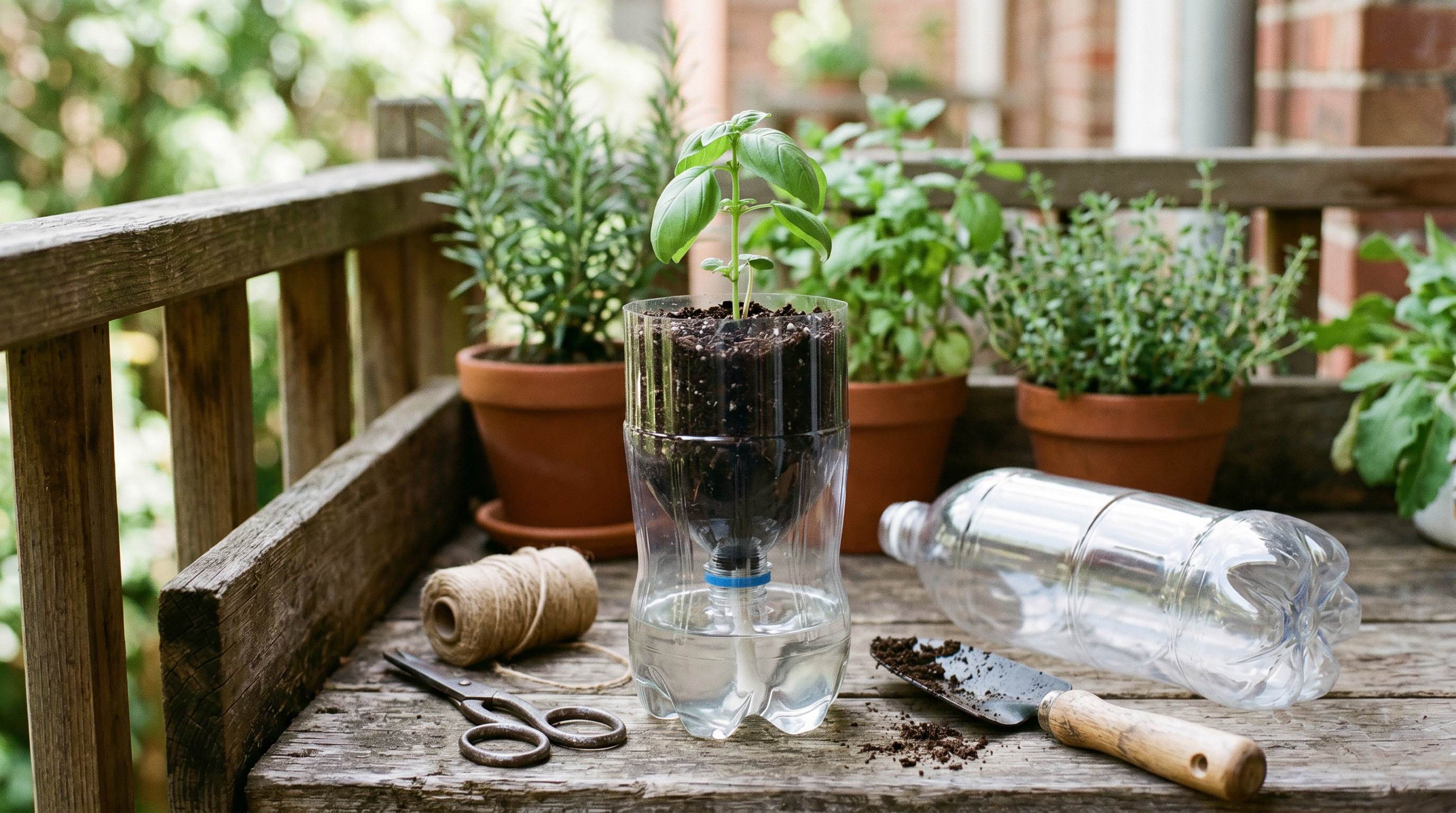
Upcycling household items into planters can be a cheap way to start gardening in a rented flat. It can also go wrong if the container has no drainage, is unstable, leaks indoors, or previously held something unsuitable.
The best upcycled planters are practical first and decorative second. They need to hold compost, drain safely, protect surfaces and suit the plant.
Start with safety and cleanliness
Only reuse containers that are clean and sensible for plants. Avoid anything that held paint, chemicals, oils or unknown materials. For edible plants, food-safe containers are the safest improvised option.
Wash containers before use. Remove labels where possible and check for cracks.
For a broader budget setup, read Cheap Ways to Start Gardening as a Renter.
Drainage is the main issue
Most plant containers need drainage holes. Without them, water sits at the bottom and roots can rot.
If you cannot add drainage holes, use the item as a decorative cover pot instead. Put the plant in a normal nursery pot inside it, then remove or empty excess water after watering.
Good items to reuse
Useful options include:
- Food tubs for microgreens
- Mushroom trays for seed starting
- Buckets for outdoor herbs or flowers
- Storage boxes for larger outdoor planters
- Old bowls as indoor cover pots
- Tin cans as decorative covers, not long-term root pots
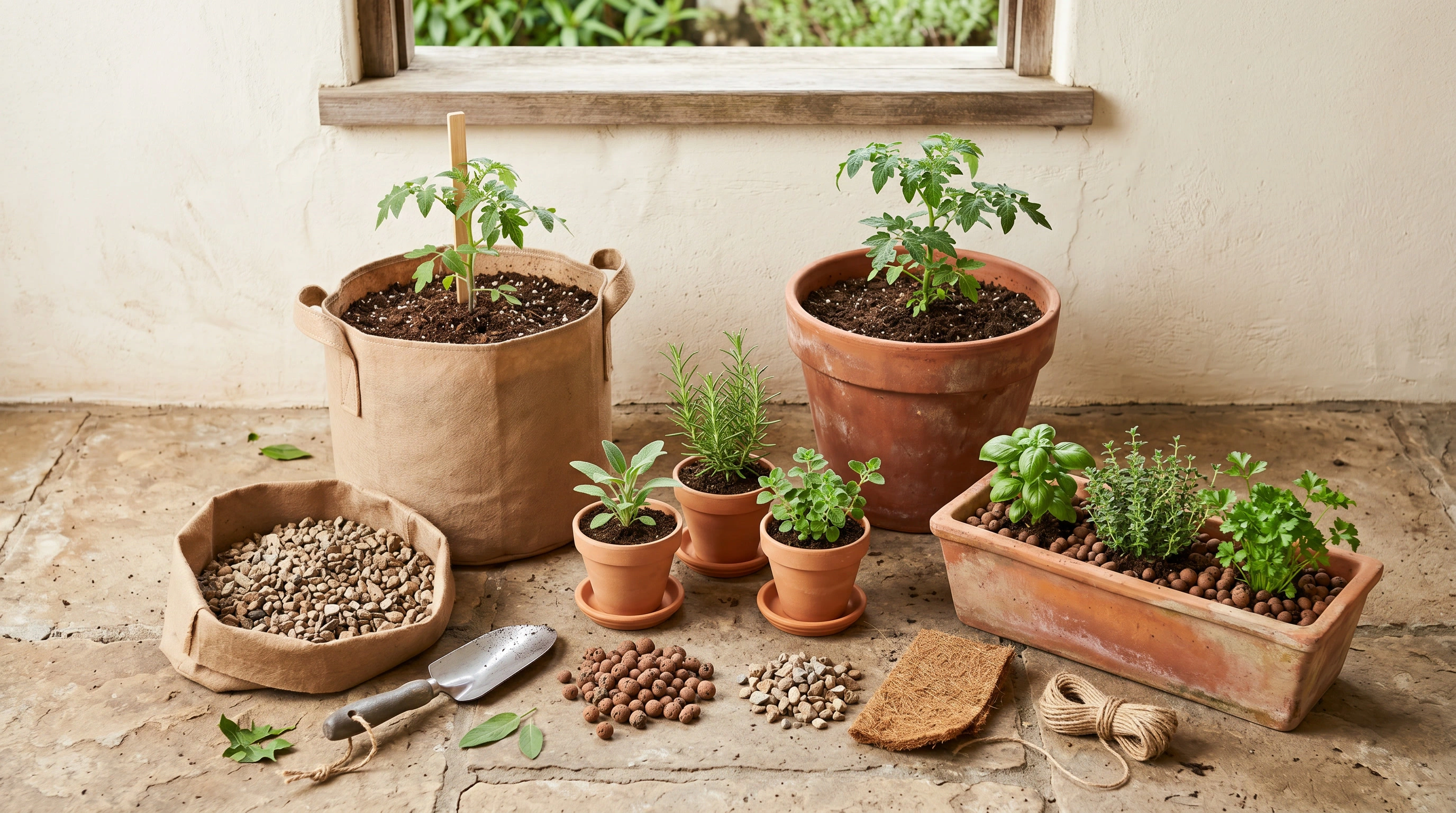
Match the container to the crop. A shallow tray is fine for pea shoots, but not for dwarf beans.
Avoid awkward containers
Avoid containers that are too flimsy, too narrow at the base, hard to clean, likely to rust quickly, or impossible to drain safely.
Do not balance planters on ledges or railings. Keep upcycled setups free-standing and stable.
Upcycling should not mean creating leaks, stains or trip hazards. Protect rented surfaces and shared spaces.
A simple upcycling process
Before turning anything into a planter, ask five questions:
- Is it clean and safe for the crop?
- Can excess water escape?
- Is it deep enough for the roots?
- Will it sit securely where I want to use it?
- Can I move it without spilling compost everywhere?
If the answer is no, use the item as a tray, organiser or outer cover instead. Not every container needs to hold compost directly.
Best uses for reused items
Upcycled containers are most useful for short-term and shallow-rooted crops. Pea shoots, microgreens, salad leaves and seedlings can all work in modest containers if drainage and cleanliness are handled well.
For longer-term plants, be more selective. A tomato, mint plant or rosemary needs more root space and stability than a small food tub can provide. In those cases, a proper pot may be cheaper in the long run because the plant has a better chance of surviving.
Keeping the setup tidy
Renter-friendly upcycling should look intentional, not like a pile of leftovers. Use matching trays where possible, label seedlings neatly, and keep compost off windowsills and shared balcony surfaces.
If the container is ugly but practical, place a nursery pot inside it rather than filling the item directly. This lets you lift the plant out for watering and reduces the risk of leaks.
For a broader low-cost setup, read Cheap Ways to Start Gardening as a Renter.
Where upcycling works best
Upcycling is strongest at the early stages of gardening. Seed trays, saucers, microgreen trays, potting trays and temporary nursery pots are all good uses. These jobs do not need beautiful containers, and they let you learn without spending much.
For permanent outdoor planters, be more cautious. A proper pot with drainage may be cheaper than replacing several cracked containers. Use upcycled items where they genuinely solve a problem, not just because they are available.
Renter-friendly surface protection
Any improvised planter should sit on something that catches drips and compost. Indoors, use a tray. Outdoors, think about staining, blocked drains and shared access. A small leak is still annoying if it marks a windowsill or balcony surface.
Check the container after the first watering, then again the next day. Some leaks only appear once compost is wet and the container flexes.
Quick answer for edible crops
For edible plants, stick to clean food-safe containers unless you are using the item only as an outer cover. Do not gamble with containers that held paint, cleaning products, oils or unknown materials. Saving money is not worth adding uncertainty to something you plan to grow food in.
When in doubt, use the item for storage, labels, trays or non-edible display rather than as the main growing container.
Common mistakes
The biggest mistake is using a cute container that cannot drain. Another is choosing something too small for the plant. A third is forgetting that wet compost is heavy.
If in doubt, use upcycled items for seed trays, cover pots or microgreens rather than large long-term crops.
FAQ
Can I grow herbs in old tins?
Use tins as decorative covers rather than long-term pots unless drainage and rust are managed carefully.
Can storage boxes become planters?
They can outdoors, if sturdy and drained properly. They may be too large or messy for indoor use.
Do upcycled planters need drainage?
Yes, unless they are only being used as outer cover pots.
Are upcycled planters good for renters?
They can be, if they are clean, removable, stable and do not leak.
Related guides
- Beginner’s Guide to Small-Space Gardening for UK Renters
- Cheap Ways to Start Gardening as a Renter
- How to Choose Pots for Balcony and Windowsill Gardening
Next step
If you want a low-cost first setup, read Cheap Ways to Start Gardening as a Renter next.