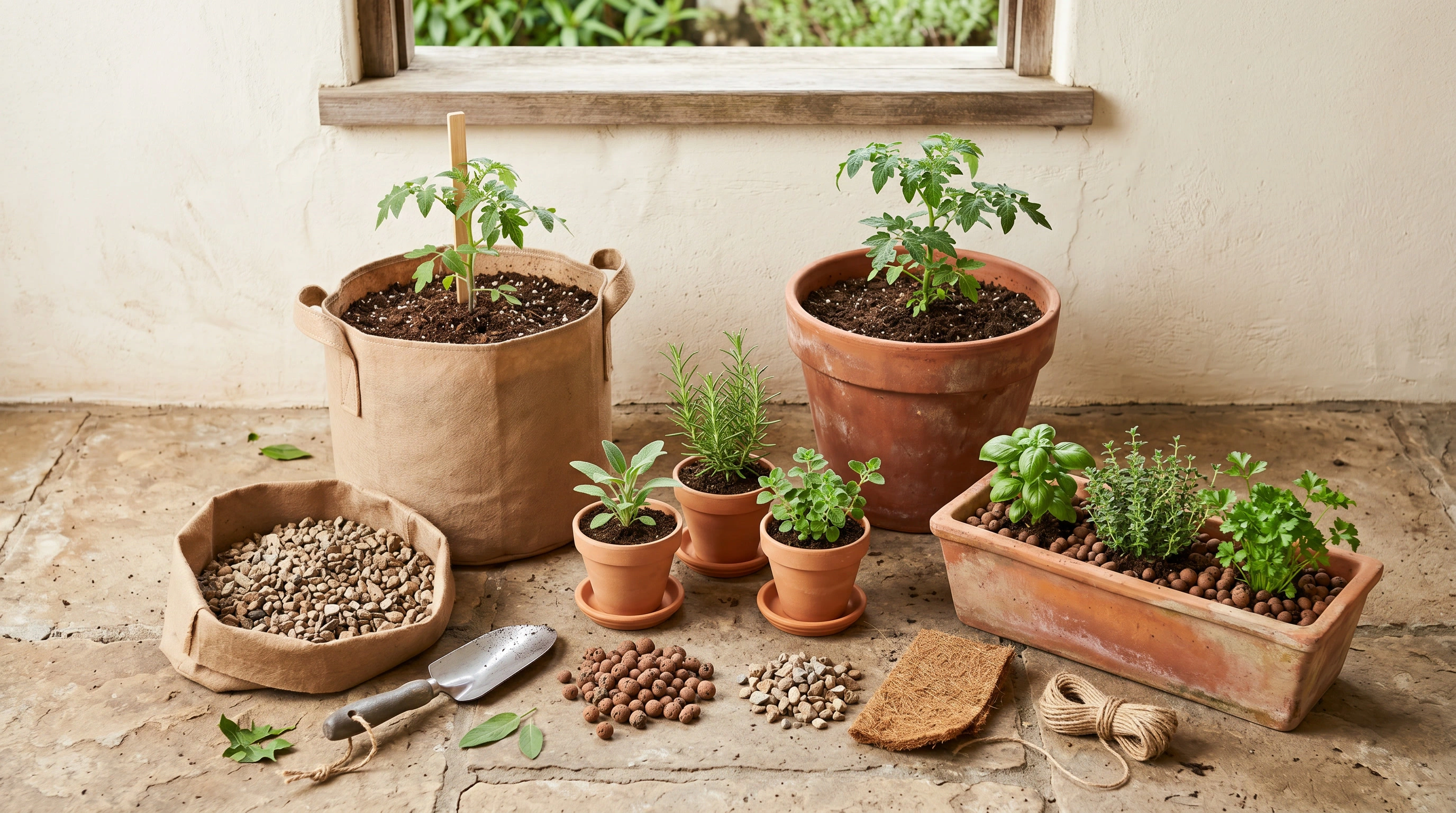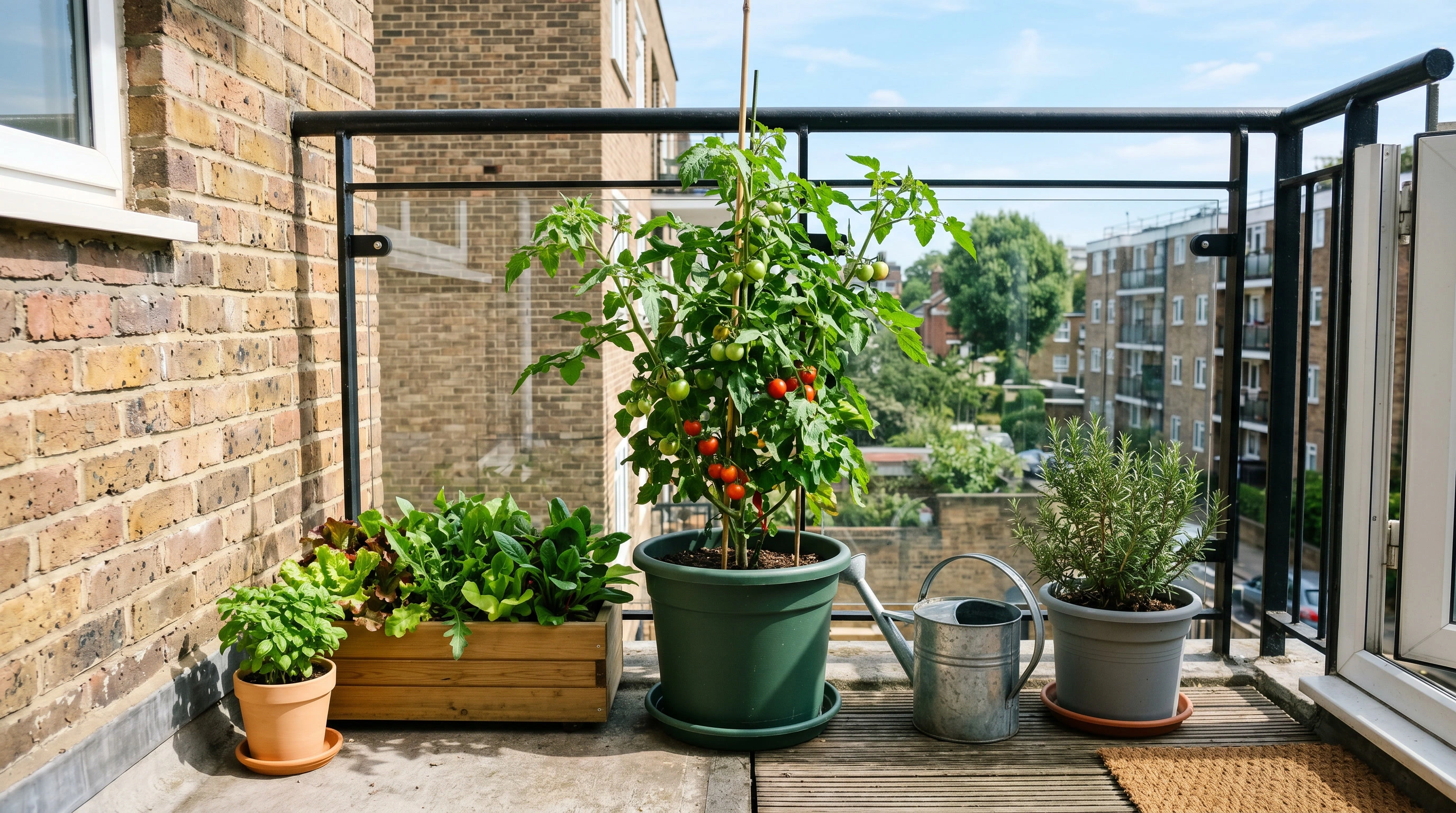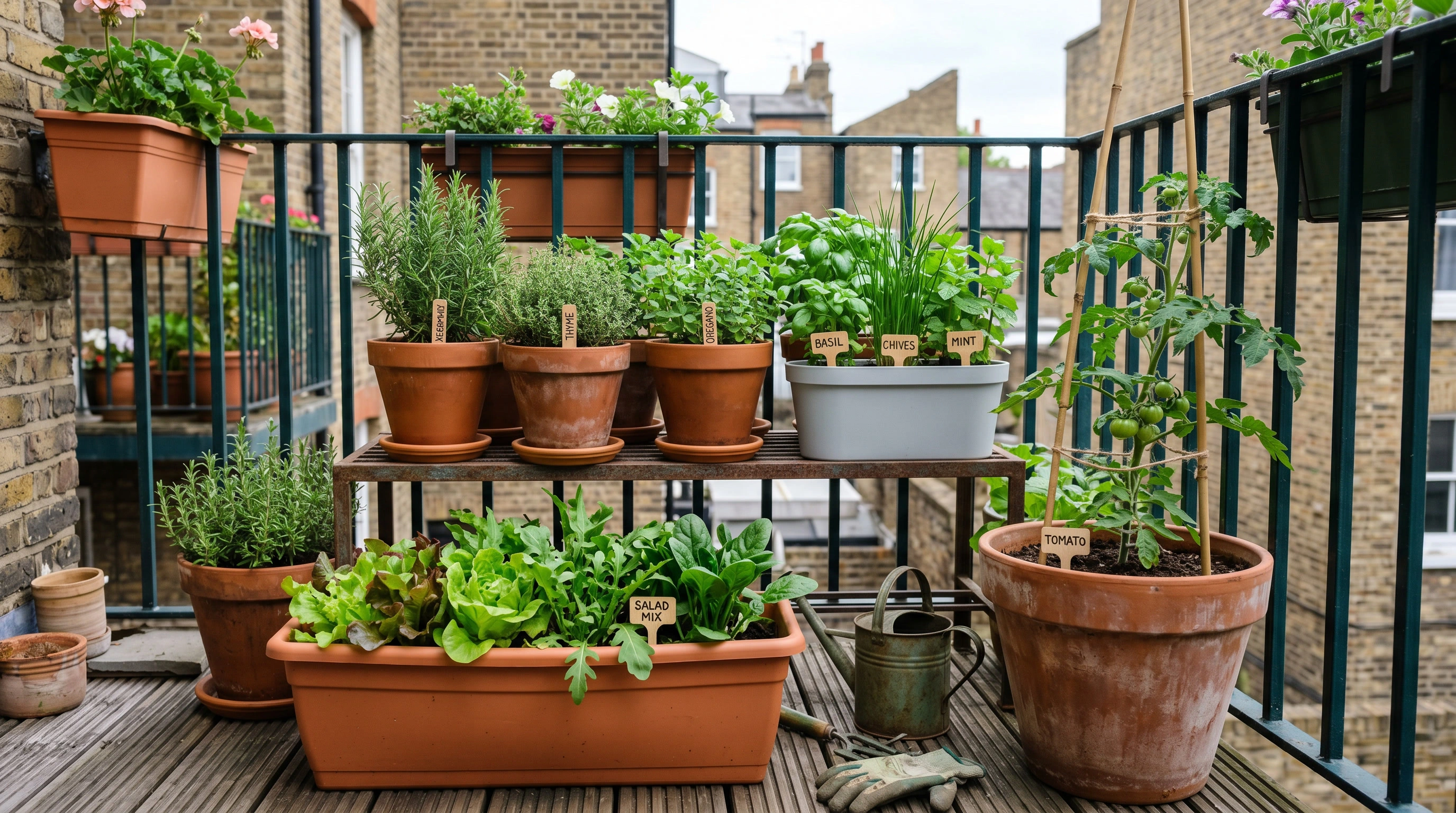
Small-space gardening is not a smaller version of having a garden. It has its own rules. You are working with pots, windowsills, balconies, patios, shared access, rental limits, wind, shade, small bags of compost and the reality that you may need to move everything one day.
That sounds restrictive, but it can also be freeing. You do not need a shed full of tools or a permanent raised bed. You can grow useful plants with a few containers, good light, sensible watering and realistic expectations.
This guide is the starting point for the site. It explains how to think about small-space gardening if you rent in the UK, live in a flat, have no garden, or only have a balcony, patio, doorstep or windowsill. It links to more focused guides where you need extra detail.
If you already know your main challenge is containers (sizes, drainage, layout, or watering system design), use the companion pillar Container Gardening for Beginners: A UK Small-Space Guide. This page is the broader renter-first roadmap.
What small-space gardening means for renters
Small-space gardening is growing plants where there is no proper garden bed. For renters and flat dwellers, that usually means:
- A sunny or bright windowsill
- A balcony
- A patio or paved yard
- A doorstep or front step
- A small shared outdoor area
- A compact conservatory or bright indoor spot
- A few pots beside a wall or railing
The main difference from traditional gardening is that nearly everything depends on containers. Containers dry out faster than the ground, warm up and cool down more quickly, and limit root space. They also make gardening more flexible, which is useful if you rent.
The goal is not to recreate an allotment in miniature. A good small-space garden is useful, manageable and easy to look after. It might give you herbs for cooking, salad leaves for lunches, a few beans, strawberries in summer, or simply the confidence to grow something from seed.
Start with your actual space, not a wish list
Most beginners start by asking what they want to grow. A better first question is: what kind of space do I actually have?
Spend a few days noticing light, wind and access. Which spots get direct sun? Which are bright but shaded? Which are exposed to wind? Which are easy to reach with a watering can? Which surfaces need protecting from water marks?
In the UK, light can be the limiting factor for much of the year. A south or west-facing balcony usually gives you the widest choice. An east-facing windowsill can still work well for herbs and leafy crops. A north-facing balcony can grow useful plants too, but it needs more realistic crop choices. If that is your situation, read Best Vegetables for North-Facing Balconies in the UK.
Do not worry if the space seems ordinary. A bright sill with three pots can be more productive than a crowded balcony that is hard to water.
A simple first setup
For a first small-space growing setup, keep it deliberately boring:
- One container with drainage holes
- One tray or saucer to catch water
- One bag of peat-free multipurpose compost
- One packet of seeds or one healthy young plant
- One small watering can or jug
- One bright place where you will see the plant often
That is enough. You can add labels, supports, liquid feed, propagators and specialist compost later. The first win is learning how quickly your container dries out in your home.
Start with one or two containers for the first month. It is much easier to expand a working routine than rescue twelve pots that all need different care.
Choosing where to grow
Windowsills
Windowsills are best for herbs, microgreens, pea shoots, small salad leaves and seed starting. They are close to the kitchen, easy to water and protected from wind. The downside is limited light, especially in winter, and limited space for roots.
South and west-facing windowsills are usually strongest for edible plants. East-facing sills can still work for parsley, chives, coriander, pea shoots and leafy crops. North-facing indoor sills can be difficult for herbs unless the room is very bright.
For more detail, read Best Herbs to Grow on a Windowsill in the UK.
Balconies
Balconies can be excellent for containers, but they bring extra practical issues. Wind can dry compost quickly and damage tall plants. Water can drip onto neighbours or mark surfaces. Some buildings have rules about railings, storage or hanging planters.
Keep balcony setups moveable and modest at first. Use containers on the floor, choose sturdy pots, and avoid attaching anything permanent. This is practical gardening guidance, not legal advice, so check your own tenancy or building rules before adding anything fixed, heavy or overhanging.
Patios and paved yards
Patios and small paved yards are often easier than balconies because they have more floor space and less wind. They can still be shaded by walls, fences and buildings. Pots near brick or paving may dry quickly in warm weather, then stay wet during cool rainy spells.
Use pot feet or trays where needed, keep access clear, and avoid filling every edge with containers before you know how much watering the space needs.
Shared spaces and doorsteps
Shared areas need extra courtesy. Avoid anything that blocks access, creates trip hazards, leaks compost, or looks abandoned. Small, neat containers are usually better than improvised setups in communal spaces.
What to grow first
Good beginner crops are forgiving, useful and not too slow. They should teach you watering, harvesting and light levels without needing a huge container.
For a full crop overview, read What Can You Grow Without a Garden in the UK?. As a quick starting list, consider these:
Herbs
Parsley, chives, mint, coriander and basil are common first choices. Parsley and chives are more forgiving indoors than basil. Mint is tough, but it should have its own pot because it spreads and competes strongly.
Herbs are good for renters because they are useful even in small quantities. You do not need a big harvest to make a pot worthwhile.
Salad leaves
Cut-and-come-again salad leaves are one of the best first crops. They can grow in troughs, window boxes or shallow containers, and you can harvest a few leaves at a time.
Sow little and often rather than tipping a whole packet into one tray. This gives you a steadier supply and reduces waste.
Radishes
Radishes are quick and satisfying. They suit containers, teach you about watering, and show results fast. They can become woody or harsh if left too long or grown under stress, so harvest them young.
Pea shoots and microgreens
Pea shoots and microgreens are useful for bright indoor spots. They are not the same as growing full vegetable plants, but they are fast, compact and good for beginners.
Dwarf beans
Dwarf French beans can work on sheltered balconies and patios. They need a deeper pot than herbs or salad leaves, but they are manageable and do not need the tall support that climbing beans need.
Compact tomatoes and chillies
These are tempting, but they are not the easiest first plants. They need warmth, sun, feeding and steady watering. Try them once you know your space, especially if you have a sunny balcony or patio.
What not to grow first
Some crops are possible in containers but frustrating for complete beginners.
Large courgettes, full-size tomatoes, maincrop potatoes, pumpkins, sweetcorn and big brassicas need more space, compost and watering than most small rented setups can comfortably provide. They are not impossible, but they can dominate a balcony and disappoint if light is poor.
Start with crops that fit your space instead of forcing your space to fit a crop.
Choosing pots and containers
Containers matter more in small-space gardening than people expect. A pot that is too small dries out quickly. A pot without drainage can rot roots. A pot that is too heavy becomes awkward if you need to clean, move or leave the property.
The main rules are simple:
- Use drainage holes
- Match pot depth to the crop
- Use trays or saucers where water could cause problems
- Avoid very heavy containers at the beginning
- Choose moveable pots if you rent
- Protect indoor sills and outdoor surfaces
For a detailed container guide, read How to Choose Pots for Balcony and Windowsill Gardening.
Do not drill, bolt, hang heavy planters over edges, or make structural changes unless you have clear permission and suitable fixings. For most renters, free-standing and removable setups are the safest starting point.
Compost for beginners
For most first crops, peat-free multipurpose compost is fine. It is widely available in the UK and suitable for many herbs, salad leaves and container vegetables.
You do not need a different compost for every pot at the start. Specialist compost can be useful later, but too many products make the first setup confusing. Buy a manageable bag size you can store. If you live in a flat, think about where the open bag will go.
Compost in containers loses nutrients over time, especially with hungry plants. Salad leaves and herbs can start simply. Fruiting crops such as tomatoes and chillies may need feeding later in the season.
Watering in small spaces
Watering is where many container gardens succeed or fail. Pots dry out faster than ground soil, especially on balconies, in wind, and against warm walls. Indoor pots can also suffer if they sit in water inside decorative covers.
The best habit is to check the compost before watering. Push a finger into the top few centimetres. If it is dry below the surface and the pot feels light, water thoroughly. If it is still damp, wait.
Water slowly enough that the compost absorbs moisture rather than immediately running down the sides. Empty indoor cover pots and outdoor trays if water remains for too long, unless the plant is clearly using it in warm weather.
Morning watering is often easiest in summer because plants start the day hydrated. In cool wet spells, you may not need to water much at all.
Light and seasons in the UK
UK growing is seasonal, even indoors. Spring brings increasing light but can still be cold. Summer is the easiest period for most edible container plants. Autumn is good for some leafy crops. Winter is slow, and many herbs struggle without strong light.
Beginners often expect windowsill herbs to grow steadily all year. Some will survive, but growth slows when light is weak. That is normal. Do not judge your ability by a tired basil plant in January.
For many renters, the best first growing window is spring into summer. Start small in March, April or May, then learn how your space behaves as the weather warms.
Renter-friendly growing principles
A renter-friendly small-space garden should be:
- Removable
- Clean enough to maintain
- Easy to water without leaks
- Respectful of neighbours and shared areas
- Not dependent on drilling or permanent fixtures
- Possible to scale down before moving
Use trays, avoid staining surfaces, keep compost tidy, and choose containers that can be lifted when full. If you have a balcony, be careful with anything near railings or edges. If you share access, keep paths clear.
This is about reducing hassle. The easier your garden is to live with, the more likely you are to keep growing.
Seeds or young plants?
Both are useful. Seeds are cheaper and give you more choice, but they can be slower and need a little patience. Young plants cost more, but they give beginners a visible starting point and reduce the early uncertainty.
For a first windowsill or balcony setup, mix the two. Buy one healthy herb plant so you have something established, then sow one quick crop such as salad leaves, radishes or pea shoots. This gives you confidence while you learn how seed sowing behaves in your home.
Seeds are especially good for salad leaves, radishes, pea shoots, coriander, spring onions and dwarf beans. Young plants are often easier for parsley, chives, mint, strawberries, compact tomatoes and chillies.
If you buy young plants in spring, do not rush tender plants straight outdoors on a cold balcony. Many plants sold early in the season have been raised in protected conditions. Give them time to adjust, and watch the weather.
Budget small-space gardening
Small-space gardening can become expensive if you buy matching planters, decorative labels, specialist tools and too many plants at once. It does not need to start that way.
Spend money first on the things that affect plant health: suitable containers, drainage, compost and healthy plants or fresh seed. Decorative extras can wait.
Useful budget habits include reusing nursery pots inside nicer cover pots, buying one manageable bag of compost rather than several specialist bags, choosing seeds you can sow more than once, growing herbs you already use in cooking, and avoiding crops that need very large containers in your first season.
Avoid false economy too. A pot that is too small, has no drainage, or cracks after one season may not be a bargain. Practical and durable usually beats cheapest possible.
Small-space growing by orientation
Orientation is not everything, but it helps you choose sensible crops.
South-facing balconies, patios and windowsills usually get the strongest light. They can suit basil, tomatoes, chillies, dwarf beans, strawberries, herbs and salad leaves. Watering becomes more important because pots dry faster.
West-facing spots often get afternoon and evening sun. They can be good for many edible plants, though containers may heat up later in the day during summer.
East-facing spots get morning light and can be useful for herbs, salad leaves, radishes and some beans. They may be kinder to leafy crops during hot spells than strong afternoon sun.
North-facing spots are best approached with leaves, herbs and shoots. They may still be bright, especially outdoors, but they are usually not the place to start with tomatoes or chillies.
A simple first-month plan
Week 1: Observe and choose
Pick one growing spot. Notice sun, wind and access. Decide whether the first crop will be indoors or outdoors.
Buy one container, compost and one easy crop. If you are unsure, choose parsley, chives, salad leaves or radishes.
Week 2: Plant
Fill the container, water the compost, and sow seeds or plant a young plant. Label it. Place it somewhere you will see it every day.
Do not add more pots yet.
Week 3: Learn watering
Check the compost daily, but only water when needed. Notice how quickly the pot dries after sun, wind, rain or indoor heating.
This week teaches you more than any product list.
Week 4: Harvest or adjust
If you chose leaves or herbs, begin small harvests when growth allows. If the plant struggles, adjust light or watering before buying more.
If the first pot is manageable, add one more crop. Choose something different enough to teach you: perhaps salad leaves if you started with herbs, or radishes if you started with leaves.
Troubleshooting early problems
Seedlings are long and leaning
They probably need more light. Move them to a brighter position if possible and avoid sowing too thickly.
Leaves are yellowing
Yellow leaves can happen for several reasons, including overwatering, underwatering, lack of nutrients, cold or age. Check the compost first. If it is constantly wet, improve drainage and water less often. If it is very dry, water more thoroughly.
Compost dries out every day
The pot may be too small, the position may be hot or windy, or the plant may have outgrown the container. A slightly larger pot or a more sheltered spot can help.
Compost stays wet for days
The pot may be too large for the plant, the space may be cool and shaded, or drainage may be poor. Let the compost dry before watering again and check that excess water can escape.
Plants look healthy but do not grow much
Low light and cool temperatures slow growth. This is common in UK flats outside the main growing season. Choose faster crops or wait for brighter months.
Common mistakes
Starting with too many pots
More pots mean more watering, more compost, more mess and more decisions. Beginners often buy enthusiasm faster than they build routine.
Choosing crops that need more sun than the space has
Tomatoes, chillies and Mediterranean herbs need good light. In shaded spaces, leafy crops are usually more realistic.
Using pots without drainage
Decorative containers can look tidy, but roots need air as well as water. Use a nursery pot inside the decorative pot, or drill only if the pot is yours and suitable.
Letting trays stay full
Trays protect rented surfaces, but standing water can damage plants. Check them after rain or heavy watering.
Forgetting wind
Balcony wind can dry compost, snap stems and chill plants. Compact plants and heavier-bottomed containers are often better than tall, top-heavy displays.
Expecting supermarket herbs to last without repotting
Supermarket herb pots are usually crowded. Split and replant them if you want them to last longer.
Basic tools worth having
You can start with very little. Useful basics include:
- A small watering can or jug
- A hand trowel
- Plant labels or masking tape
- A tray for potting indoors
- Secateurs or clean scissors
- A soft brush and dustpan for compost spills
You do not need a large tool kit. If storage is tight, avoid buying tools for imagined future projects.
For a fuller breakdown of what is worth buying now and what can wait, use the small-space gardening kit list alongside this beginner guide.
How this site is organised
This article is the main beginner hub. From here, the next useful guides are:
- What Can You Grow Without a Garden in the UK? for crop ideas
- How Much Sunlight Do Herbs and Vegetables Need? for matching crops to light
- Small-Space Gardening Mistakes Beginners Make for avoiding common early problems
- Year-Round Balcony Planting Calendar for the UK for seasonal timing
- Best Herbs to Grow on a Windowsill in the UK for indoor herbs
- Best Vegetables for North-Facing Balconies in the UK for lower-light balconies
- Best Vegetables for South-Facing Balconies in the UK for sunny balconies
- Growing Salad Leaves in Containers in the UK for an easy first crop
- Growing Cherry Tomatoes in Pots in the UK for a more demanding summer crop
- How to Choose Pots for Balcony and Windowsill Gardening for containers
- How Often Should You Water Plants in Pots in the UK? for watering routines
- Cheap Ways to Start Gardening as a Renter for low-cost setups
- Container Gardening for Beginners: A UK Small-Space Guide for a complete container system
- Growing Vegetables in Pots: A Beginner Guide for Small Spaces for first edible containers
- Windowsill Herbs for Beginners: What Works Indoors? for indoor starter routines
As the site grows, response posts will answer narrower questions, staple posts will cover important topics in detail, and pillar posts like this one will connect everything together.
Related guides
- What Can You Grow Without a Garden in the UK?
- How Much Sunlight Do Herbs and Vegetables Need?
- Small-Space Gardening Mistakes Beginners Make
- Year-Round Balcony Planting Calendar for the UK
- Container Gardening for Beginners: A UK Small-Space Guide
FAQ
Can I garden in a rented flat?
Yes, if you keep the setup removable, clean and appropriate for the space. Windowsill herbs, small containers and free-standing balcony pots are common renter-friendly options. Avoid permanent fixings or anything that could damage the property.
What is the easiest thing to grow without a garden?
Salad leaves, parsley, chives, pea shoots and radishes are good first choices. They are useful, compact and more forgiving than many larger crops.
Can I grow vegetables on a balcony?
Yes, especially leafy vegetables, herbs, dwarf beans, compact tomatoes and chillies in sunny sheltered spots. In lower light, focus on leaves and herbs rather than fruiting crops.
Can I grow food on a windowsill all year?
Some plants can grow indoors year-round, but winter light is weak in much of the UK. Microgreens, pea shoots and some herbs are more realistic than expecting fast growth from sun-loving herbs in winter.
Do I need expensive pots?
No. You need suitable pots, not expensive ones. Drainage, size, weight and practicality matter more than price.
Is small-space gardening worth it?
Yes, if you measure success realistically. You may not replace your weekly shop, but you can grow useful herbs, leaves, small harvests and confidence.
Next step
If you are ready to choose your first crops, go next to What Can You Grow Without a Garden in the UK?. If you already know what you want to grow but need containers, start with How to Choose Pots for Balcony and Windowsill Gardening.