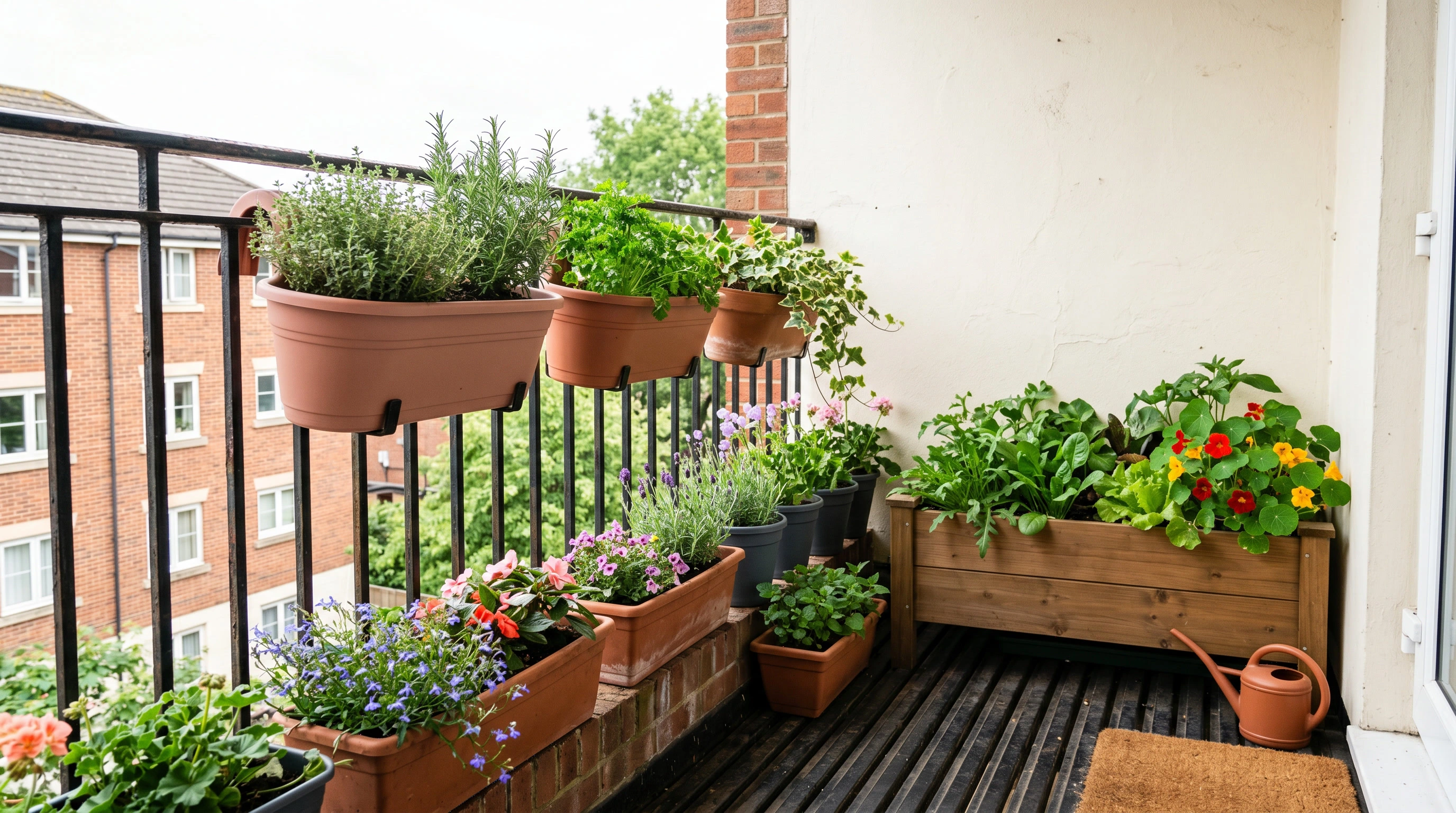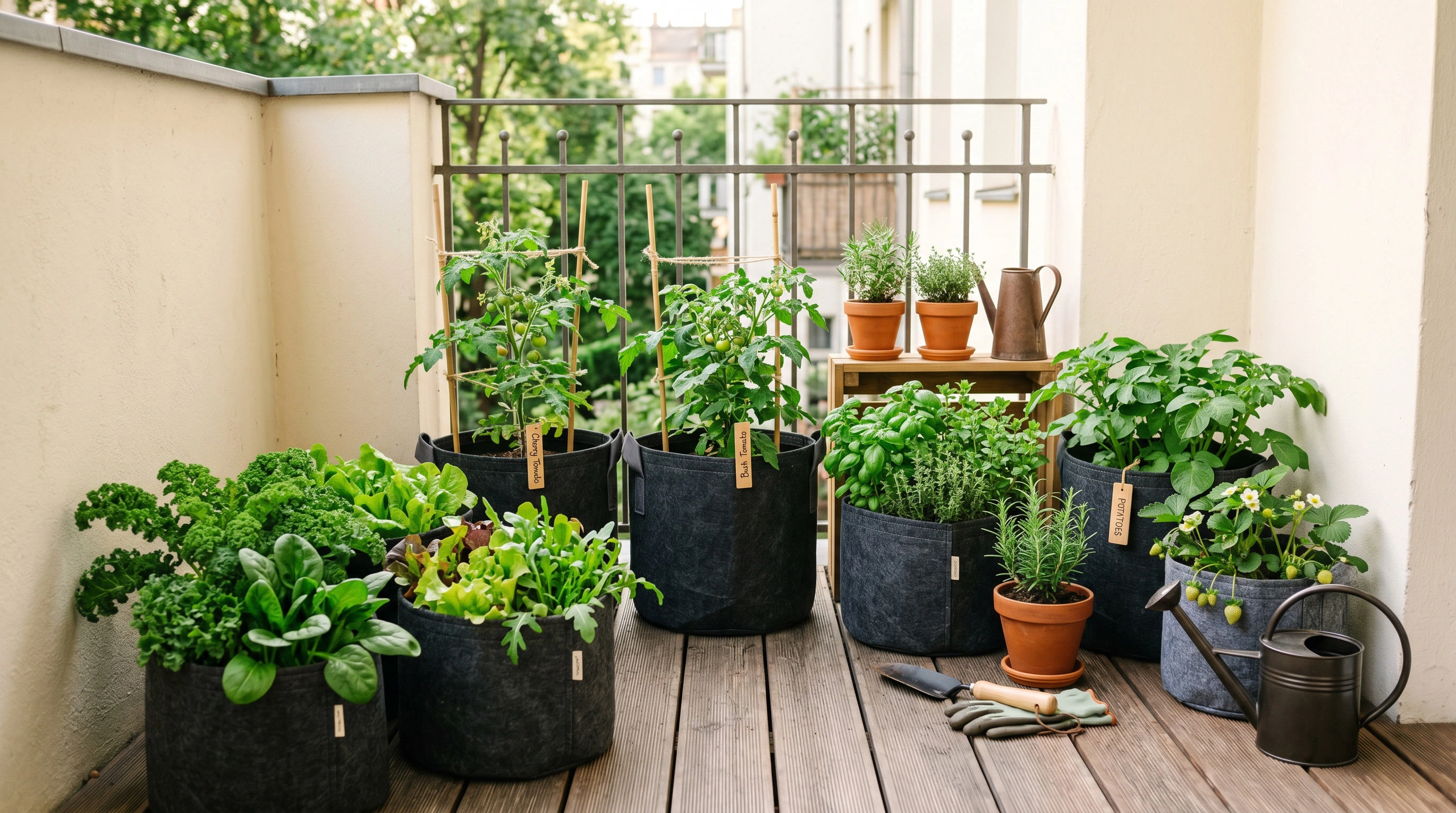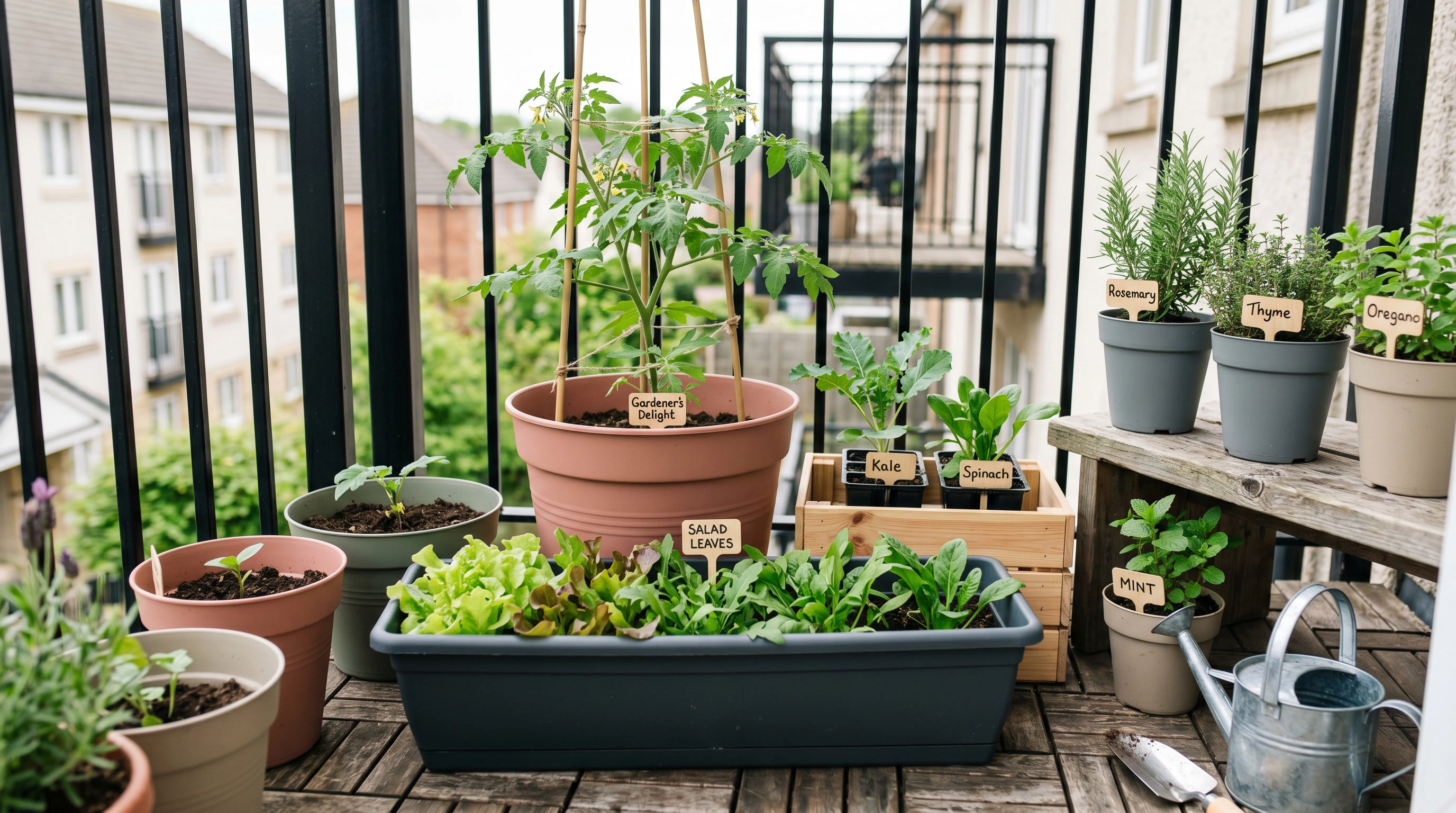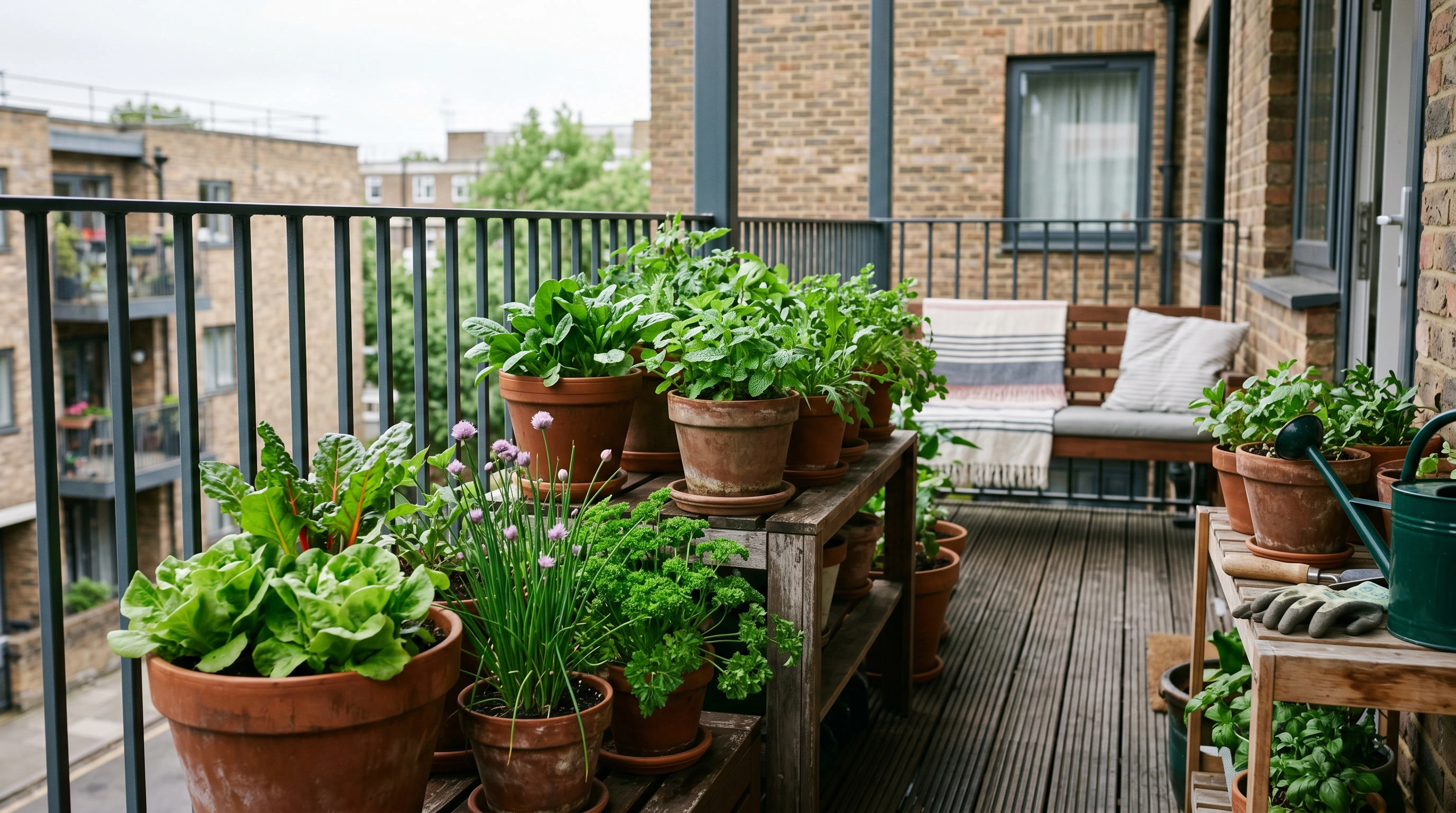
A north-facing balcony is not the easiest place to grow vegetables, but it is not a lost cause. The best results come from choosing crops that cope with cooler conditions, lower direct sun and container life.
The key is to be realistic. A north-facing balcony in the UK is usually better for leafy crops, herbs and quick harvests than for tomatoes, peppers or courgettes. You can still grow useful food, but you need to match the crop to the light.
What north-facing really means
North-facing does not always mean deep shade. Some north-facing balconies are open to the sky and bright for much of the day. Others are boxed in by buildings, railings, walls or overhangs.
Before choosing crops, look at the actual light. Does the balcony get any direct sun in summer? Is it bright but shaded? Is it gloomy even at midday? Does reflected light bounce from nearby walls? Is one edge brighter than the back wall?
These details matter more than the compass direction alone.
If you are still planning your first setup, read the Beginner’s Guide to Small-Space Gardening for UK Renters for the broader framework.
The best crop type: leafy greens
Leafy greens are the most realistic vegetables for lower-light balconies. They do not need to ripen fruit, and many prefer cooler conditions to hot summer sun.
Good options include:
- Loose-leaf salad mixes
- Rocket
- Spinach
- Mizuna
- Mustard leaves
- Pak choi harvested young
- Chard harvested as baby leaves
Use troughs, window boxes or shallow containers with drainage. Sow small amounts regularly rather than one large batch. This keeps harvests younger and more manageable.
Ranking crops for a north-facing balcony
Some crops are worth trying first, while others should wait until you understand the space.
Loose-leaf salad, rocket, mizuna, parsley, chives, mint and pea shoots are the safest first choices. They can give useful harvests without needing the strongest sun.
Spinach, mustard leaves, spring onions, radishes and baby beetroot can work if the balcony is bright enough. They may be slower than they would be in sun.
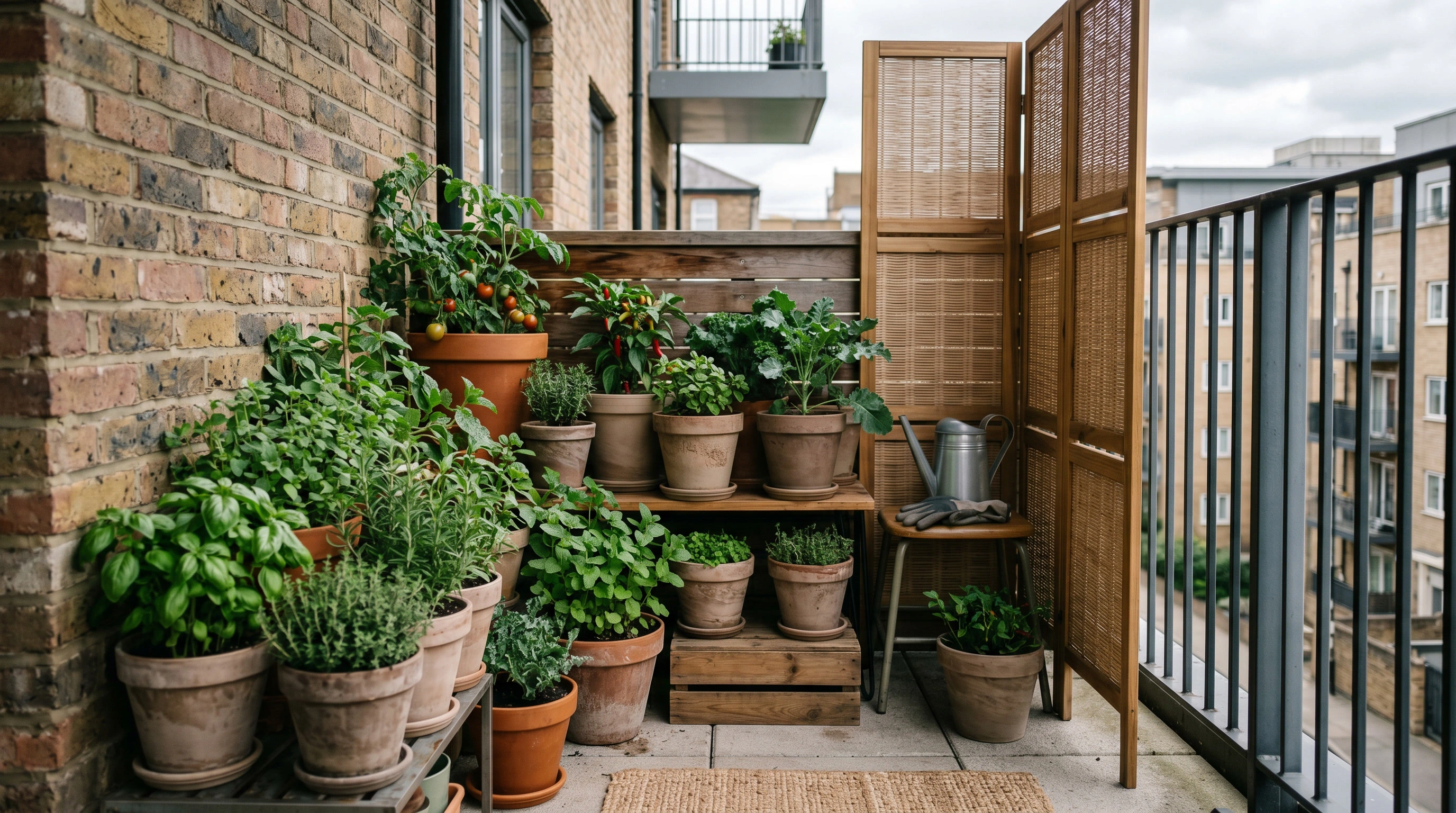
Compact tomatoes, chillies and dwarf beans are experiments on a north-facing balcony. Try them only if your balcony still gets direct summer sun or strong reflected light.
This ranking helps you avoid judging the whole balcony by a crop that was unlikely to suit it.
On a shaded balcony, grow leaves for small regular pickings rather than expecting large heads of lettuce.
Herbs that cope with lower light
Herbs can be more useful than vegetables in small shaded spaces because you only need small amounts.
Good choices include:
- Parsley
- Chives
- Mint
- Coriander
Parsley and chives are especially useful. Mint is tough but should have its own pot. Coriander can work, but it often bolts when stressed, so sow small batches.
Mediterranean herbs such as rosemary, thyme and sage usually prefer stronger sun and better airflow. They may survive, but they are not the best first choices for a shaded balcony.
Pea shoots and microgreens
Pea shoots and microgreens are excellent for low-light small-space growing. They are quick, compact and useful. You can grow them in trays on the balcony during mild weather or indoors on a bright sill.
They are not full vegetable plants, but they give reliable harvests in places where larger crops would struggle.
Radishes
Radishes can work in containers, but on a shaded balcony they may grow more slowly. They are worth trying because they are quick and do not need deep pots.
If roots are disappointing, use the leaves while they are young and tender. Do not leave stressed radishes sitting for weeks hoping they will improve.
Spring onions
Spring onions can be grown in containers and do not need as much space as many vegetables. They still need decent light, but they are more realistic than large fruiting crops.
Sow in small batches. Harvest young if growth is slow.
Baby beetroot and beet leaves
Beetroot can be grown in containers, but in lower light it is often better to think of it as a baby crop. You may get small roots or useful leaves rather than large roots.
Use a deeper container than you would for salad leaves and keep watering steady.
What to avoid on most north-facing balconies
Tomatoes
Tomatoes need sun, warmth, feeding and steady watering. A north-facing balcony is usually not ideal. If your balcony gets several hours of direct summer sun despite facing north, a compact bush tomato might be worth trying, but do not make it your main crop.
Peppers and chillies
Peppers and chillies are warmth-loving plants. They are usually better on sunny sheltered balconies or indoors with strong light.
Courgettes
Courgettes become large and thirsty. They are rarely a good fit for a shaded balcony.
Aubergines
Aubergines need warmth and sun. They are not a sensible beginner choice for a north-facing rented balcony.
Do not judge your balcony by whether it can grow tomatoes. Shaded small spaces can still be productive with leaves, herbs and quick crops.
How to use the brightest part of the balcony
Most balconies have microclimates. The front rail may be brighter than the back wall. One corner may get morning or evening sun. A white wall may reflect useful light.
Put edible crops in the brightest, easiest-to-water area. Use darker corners for storage, empty pots or shade-tolerant ornamentals if you want them.
Avoid putting tall furniture or privacy screens in front of your growing area if light is already limited.
Managing wind and cool conditions
North-facing balconies can be cool as well as shaded. Wind makes this harder because it dries compost and chills plants.
Use lower, sturdier containers for leafy crops. Keep taller plants close to a sheltered wall if that wall is still bright enough. Avoid thin, top-heavy pots for anything that catches wind.
Do not block all airflow, though. Damp, still air around crowded leaves can encourage problems. The aim is shelter, not sealing plants into a wet corner.
If the balcony is exposed, grow compact crops and harvest them young. Large plants that need support are more work and more likely to struggle.
Containers for north-facing balconies
For leafy crops, troughs and window boxes can work well. For herbs, use individual pots so each plant can be moved to the best light. For deeper crops such as beetroot or spring onions, choose containers with more depth.
Drainage matters even in shade. Lower light means compost can stay wet for longer, especially in cool weather. Use drainage holes and avoid letting trays sit full of water.
For more detail, read How to Choose Pots for Balcony and Windowsill Gardening.
Watering in shade
North-facing balconies can still dry out in wind, but they may not dry as quickly from sun. This means you should check compost rather than watering on a fixed schedule.
Push a finger into the compost. If it is damp below the surface, wait. If it is dry and the pot feels light, water thoroughly.
Wind can be deceptive. A shaded balcony may still dry pots quickly if it is exposed.
UK seasonal timing
Spring and autumn can be useful for leafy crops because many leaves prefer cooler weather. Summer gives more light, even on north-facing balconies, but still may not be enough for fruiting crops.
Winter growth is slow. Hardy herbs may survive, but do not expect fast harvests.
In early spring, start small. Sow leaves in batches and see how quickly they grow. Your balcony will teach you what is realistic.
Month-by-month beginner approach
March and April
Start with hardy leaves, parsley, chives, pea shoots and small sowings of radishes if conditions are mild enough. Growth may be slow, so sow modestly.
May and June
This is a good time to add more salad leaves, rocket, spring onions and herbs. If your balcony gets direct summer sun, you can test one more ambitious crop.
July and August
Keep watering consistent. Leaves may bolt faster in warm spells, even on a shaded balcony. Sow small repeat batches rather than relying on one container.
September and October
Return to cooler-season leaves such as rocket, spinach and mustard mixes. Growth slows as light drops, but autumn can still be useful.
November to February
Keep expectations low. Focus on hardy herbs, pea shoots indoors, planning, cleaning containers and preparing for spring.
A simple north-facing balcony plan
Try this for a first season:
- One trough of mixed salad leaves
- One pot of parsley
- One pot of chives
- One separate pot of mint
- One tray of pea shoots
- One small batch of radishes
If that works, add spinach, rocket, mizuna or spring onions. If growth is very slow, focus more on herbs and shoots.
When to accept indoor growing instead
Sometimes the balcony is simply too dark, too windy or too awkward. In that case, use the balcony for a few hardy herbs and move fast crops indoors.
Pea shoots, microgreens and some windowsill herbs can be more satisfying than forcing vegetables outdoors in poor conditions. The guide to Best Herbs to Grow on a Windowsill in the UK is a useful next step if your balcony is very limited.
Common mistakes
Growing sun-loving crops first
Tomatoes and chillies are exciting, but they are poor tests of a shaded balcony. Start with leaves.
Overwatering because the surface looks dry
The top can dry while the lower compost stays wet. Check below the surface.
Using containers that are too shallow for everything
Salad leaves can use shallow troughs. Spring onions and beetroot need more depth.
Crowding pots against the darkest wall
Use the brightest edge for edible crops.
Giving up too quickly
Lower-light growing is slower. Measure success by useful small harvests, not allotment-sized yields.
Related guides
- Beginner’s Guide to Small-Space Gardening for UK Renters
- How Much Sunlight Do Herbs and Vegetables Need?
- Growing Salad Leaves in Containers in the UK
- How to Protect Balcony Plants from Wind
FAQ
Can you grow vegetables on a north-facing balcony?
Yes, but choose leafy vegetables, herbs and quick crops. Fruiting crops are much harder unless the balcony still gets good direct sun.
Will lettuce grow on a north-facing balcony?
Loose-leaf lettuce and salad mixes can grow in bright shade, though growth may be slower. Harvest leaves young.
Can tomatoes grow on a north-facing balcony?
Usually they are not the best choice. Try tomatoes only if the balcony gets several hours of direct summer sun and is warm and sheltered.
What herbs grow on a north-facing balcony?
Parsley, chives and mint are good first choices. Coriander can work as a short-term crop.
Are north-facing balconies useless for growing food?
No. They are simply better suited to leaves, herbs, shoots and modest harvests than to sun-loving summer vegetables.
Next step
If you know your balcony is shaded but still want a first setup, choose containers next. Read How to Choose Pots for Balcony and Windowsill Gardening, then return to this guide to pick your first leaves and herbs.