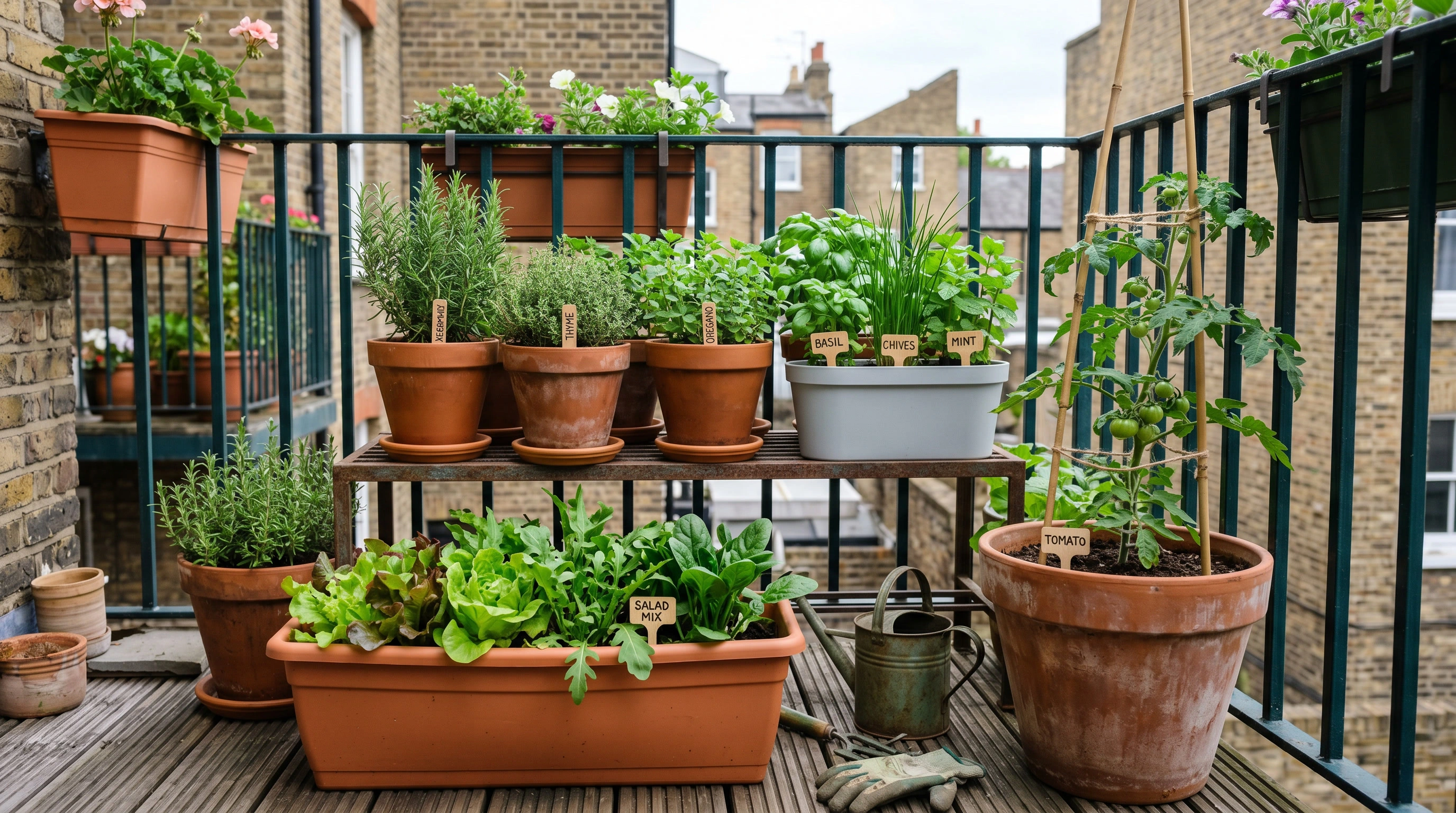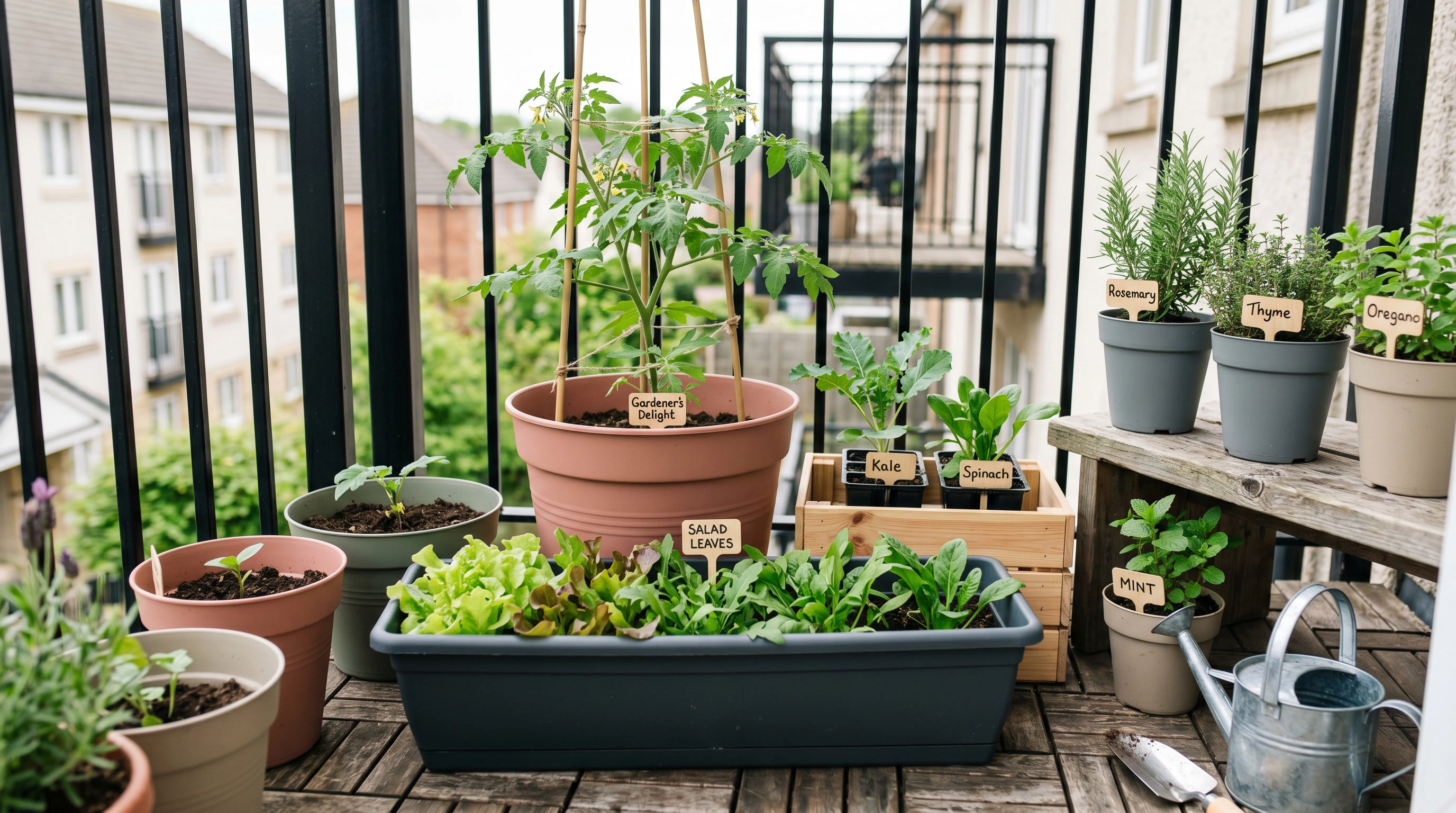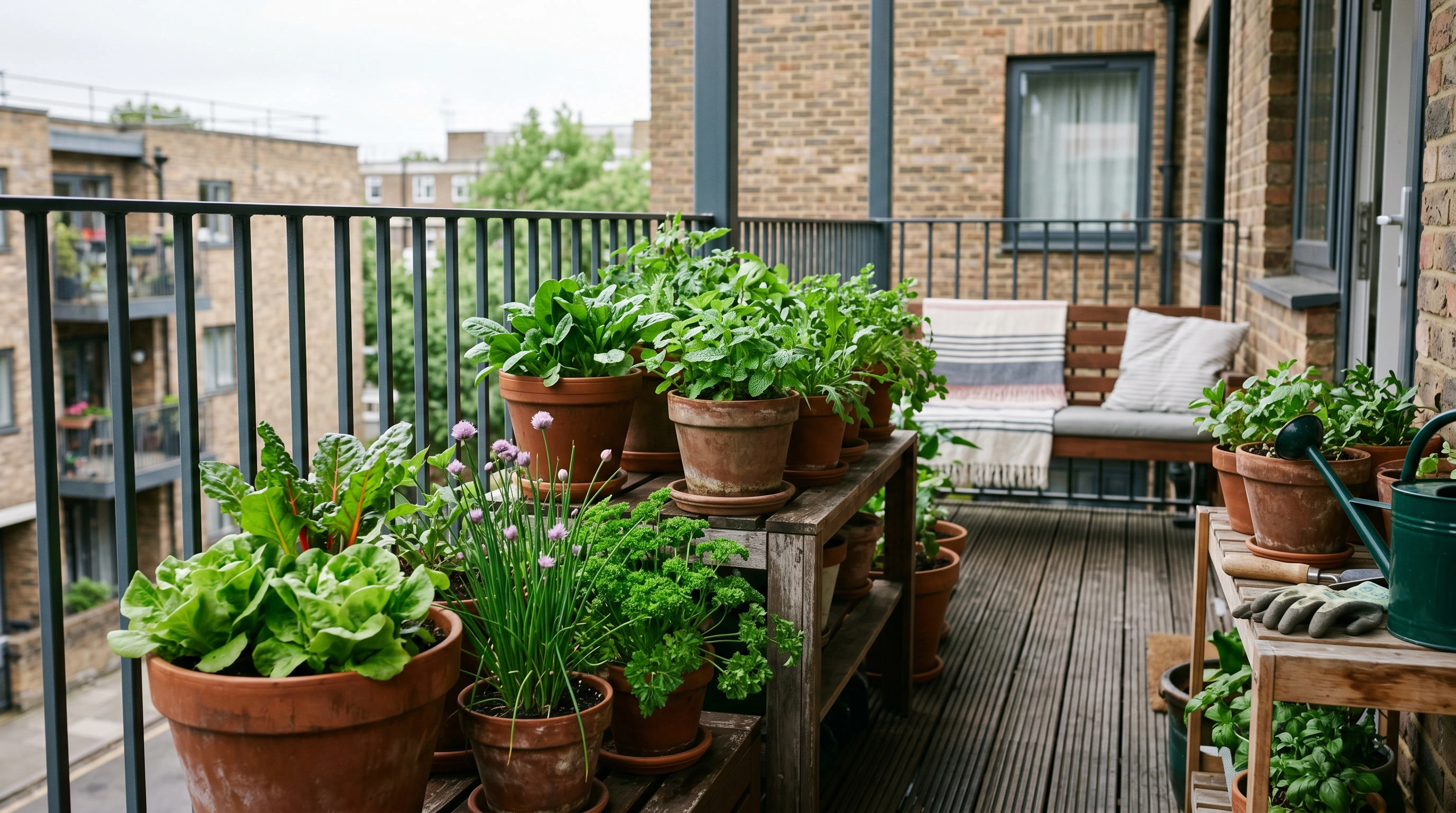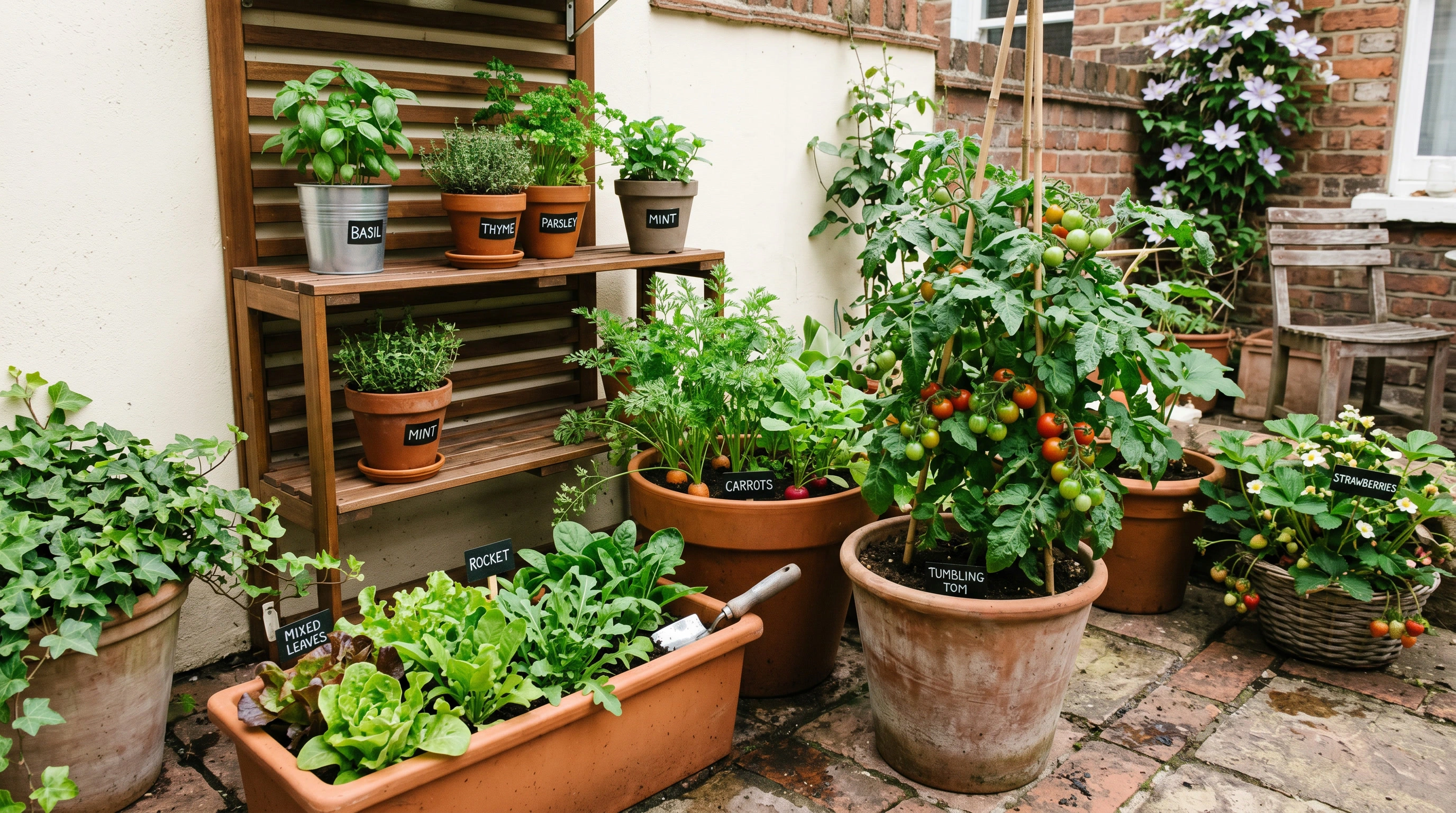
Growing lettuce in pots is one of the best starting points for small-space gardeners in the UK. They grow quickly, suit containers, and give useful harvests without needing a large garden bed. They are also forgiving enough for renters and flat dwellers who are still learning watering and light.
You will not replace every bag of salad from one windowsill tray, but you can grow fresh leaves for sandwiches, bowls and quick meals.
If you specifically want a lettuce-focused version of this topic, read Growing Lettuce in Pots: Easy Salad Leaves for Small Spaces, which goes deeper on lettuce varieties, pot depth and repeat harvests.
Why salad leaves suit small spaces
Salad leaves do not need deep soil, permanent supports or months of space. You can grow them in troughs, window boxes, balcony pots or shallow containers on a bright windowsill.
They are also flexible. If you only have a small container, grow baby leaves. If you have a balcony trough, sow short rows. If your space is shaded, choose leafy mixes before sun-loving crops.
For more crop options, read What Can You Grow Without a Garden in the UK?.
Best salad leaves for containers
Good choices include:
- Loose-leaf lettuce mixes
- Rocket
- Mizuna
- Mustard leaves
- Spinach for baby leaves
- Pak choi harvested young
- Chard harvested as baby leaves
Avoid starting with large hearting lettuces. Loose-leaf types are easier because you can harvest a few leaves at a time.
A simple container salad plan
For a first attempt, use one rectangular trough or window box rather than several tiny pots. Sow one half with a loose-leaf lettuce mix and the other half with rocket, mizuna or mustard leaves. Leave a little space between rows so you can water and harvest without disturbing every seedling.
After two or three weeks, sow a second small container if the first one is growing well. This staggered approach gives you a backup and avoids the classic beginner problem of having one crowded tray that becomes old all at once.
If you have a very small windowsill, grow baby leaves rather than trying to raise full lettuce heads. Baby leaves need less space, are quicker, and are more realistic indoors.
Choosing a container
Use a container with drainage holes. Salad leaves can grow in shallow containers, but they still need enough compost to hold moisture. Very shallow trays dry quickly and give roots little room.
Troughs and window boxes work well because they give surface area for sowing. A container 10 to 15 cm deep can work for baby leaves, while deeper containers make watering easier.
For more container help, read How to Choose Pots for Balcony and Windowsill Gardening.
Sowing salad leaves
Fill the container with compost and water it before sowing. Scatter seeds thinly. Cover lightly if the packet instructs, then water gently.
Do not pour the whole packet into one container. Overcrowded seedlings compete for light, water and airflow. It is better to sow a small amount every couple of weeks.
Sow short rows or small patches. This makes it easier to harvest and resow sections rather than clearing the whole container at once.
Where to grow salad leaves
Bright outdoor light gives the strongest growth, but salad leaves can tolerate cooler conditions. A balcony, patio or bright windowsill can all work.
In summer, very hot sunny spots can make leaves wilt or bolt. In shaded spaces, growth may be slower but still useful. If your balcony faces north, read Best Vegetables for North-Facing Balconies in the UK.
Watering salad leaves
Salad leaves need steady moisture. If they dry out repeatedly, growth slows and leaves can become tough. If they sit in soggy compost, roots suffer.
Check the compost regularly. Water when the top begins to dry, and water gently so seeds and seedlings are not washed around.
The watering guide, How Often Should You Water Plants in Pots in the UK?, explains this in more detail.
Harvesting
Harvest leaves when they are young and tender. For cut-and-come-again leaves, take outer leaves and leave the centre to keep growing. Do not strip the plant bare.
You can also cut a section with scissors and let it regrow if the mix allows. Regrowth depends on the crop, weather and how hard you cut.
Succession sowing
Succession sowing means sowing little and often. For salad leaves, this is more useful than one big sowing.
Try sowing a small patch every two or three weeks during the main growing season. This gives you younger leaves and reduces the risk of one tray getting old, crowded or bolting.
Growing indoors
A bright windowsill can work for baby leaves, especially in spring and summer. Winter growth is slower because UK light levels are lower.
Indoor containers need trays to protect surfaces. They also need careful watering because there is no rain and less airflow.
Growing outdoors
Outdoor containers usually give better light and airflow than indoor trays. A balcony or patio trough can produce stronger salad leaves than a windowsill, especially from spring to early autumn.
The trade-off is watering. Outdoor containers dry faster in sun and wind. Check them more often, especially if the container is shallow or the balcony is exposed. In hot spells, move salad leaves into partial shade if they wilt or bolt quickly.
Feeding and compost
For short-term salad leaves, fresh peat-free multipurpose compost is normally enough. You do not need a complicated feeding routine for a beginner tray. If you reuse old compost, refresh it with new compost and remove large roots or debris.
Avoid using heavy garden soil in small containers. It can compact, drain poorly and make pots awkward to move.
Pests and problems
Slugs can be a problem outdoors, especially on patios or lower balconies. Indoors, fungus gnats may appear if compost stays too wet. Good airflow, sensible watering and clean trays help.
If leaves look pale and stretched, they probably need more light. If they wilt daily, the container may be too shallow or too hot. If they stop growing after the first cut, sow a fresh batch rather than trying to keep tired plants going indefinitely.
Container layouts that work
For a trough, sow short rows across the width rather than one long line from end to end. This makes it easier to harvest one section and resow it later. For a round pot, sow in small patches rather than scattering the entire surface thickly.
If you grow several types, keep fast crops and slower crops in separate areas. Rocket and mustard may grow quickly and become strong-tasting if left too long. Lettuce mixes may stay milder. Separate patches make harvesting easier.
What to do when leaves bolt
Bolting means the plant starts flowering and the leaves often become tougher or stronger-tasting. It is common in warm weather, crowded containers or plants that have dried out.
Once a salad crop bolts, do not spend weeks trying to reverse it. Harvest what is still useful, clear the tired plants, refresh the surface compost and sow again when conditions are cooler. In summer, use a slightly shaded position if you have one.
How much can you expect?
A small tray of salad leaves is best treated as a fresh addition, not a full replacement for bought salad. It can give handfuls of leaves for sandwiches and meals, especially if you sow little and often.
This realistic expectation keeps the crop enjoyable. The value is freshness, convenience and learning, not huge harvests from a windowsill.
Once you know which container works, repeat it rather than reinventing the setup every time. Salad growing rewards small consistent sowings more than complicated experiments.
This is why salad leaves are such a useful training crop. They teach timing, watering and harvesting without needing deep pots or permanent structures.
They also recover the space quickly. If one sowing fails, you can clear it, water the compost, and try again with a smaller pinch of seed.
Good crops to grow alongside salad leaves
Pair salad leaves with herbs, pea shoots or radishes. These crops suit similar beginner setups and do not need large permanent structures. If you have a sunny balcony, you can also grow salad in spring and autumn while using summer space for tomatoes or beans.
For an easy herb pairing, read Best Low-Maintenance Herbs for Pots.
A simple repeat sowing routine
Keep a small envelope or clip on the seed packet and sow a pinch every two or three weeks while conditions are suitable. Label the date if you are testing different containers. After a few rounds, you will know whether your balcony, patio or windowsill grows better leaves.
Do not be afraid to clear old plants. Fresh sowings usually taste better and look neater than tired, crowded leaves that have been cut too many times.
Using salad leaves as a confidence crop
Salad leaves are a good confidence crop because they show progress quickly. You can see germination, thinning, watering problems and harvest timing in a short period. Those lessons transfer to herbs, seedlings and other container crops.
If you are nervous about gardening, start here before buying larger plants.
Common mistakes
The most common mistake is sowing too thickly. The second is letting shallow containers dry out. The third is waiting too long to harvest.
Salad leaves are best harvested young. If you wait for supermarket-sized heads from a small tray, you may be disappointed.
If you are starting salad leaves from seed, the small-space gardening kit list can help you compare trays, labels and watering basics without overbuying.
FAQ
Can salad leaves grow on a windowsill?
Yes, if the sill is bright. Growth is best in spring and summer and slower in winter.
How deep should a container be for salad leaves?
Baby leaves can grow in shallow containers, but 10 to 15 cm or more makes watering easier.
How often should I sow salad leaves?
Small sowings every two or three weeks can give a steadier supply than one big sowing.
Do salad leaves need full sun?
They like bright light, but many leafy crops cope with partial shade better than tomatoes or peppers.
Why are my salad leaves bitter?
They may be old, stressed by heat, too dry, or bolting. Harvest younger leaves and keep watering steady.
Related guides
- Beginner’s Guide to Small-Space Gardening for UK Renters
- What Can You Grow Without a Garden in the UK?
- How Often Should You Water Plants in Pots in the UK?
- Growing Lettuce in Pots: Easy Salad Leaves for Small Spaces
Next step
If salad leaves are your first crop, pair them with a simple herb from Best Low-Maintenance Herbs for Pots.