Light is one of the first things to understand in small-space gardening. Water, compost and pots matter, but a plant in the wrong light will always be harder to grow. This is especially true in UK flats, where windowsills can look bright to us but still be weak growing spaces for sun-loving plants.
If you rent or garden on a balcony, the goal is not to find perfect conditions. It is to match the plant to the light you actually have.
| Light level | Good beginner choices | Less suitable choices |
|---|---|---|
| Bright but not sunny | Parsley, chives, mint, salad leaves, pea shoots | Tomatoes, peppers, basil in winter |
| Several hours of direct sun | Basil, dwarf beans, strawberries, compact tomatoes | None of the usual beginner crops, though watering matters more |
| Very low indoor light | Microgreens, pea shoots as a short-term crop | Most long-term herbs and fruiting vegetables |
Direct sun, bright shade and low light
Direct sun means the sun itself shines on the plant. Bright shade means the space is light but the sun does not directly hit the leaves for long. Low light means the space feels dim, is blocked by buildings, or only gets weak reflected light.
For small-space gardening, this distinction matters more than the label on a seed packet. A south-facing balcony in summer may be hot and bright. A north-facing windowsill behind a deep reveal may be too dim for most herbs.
Herbs by light level
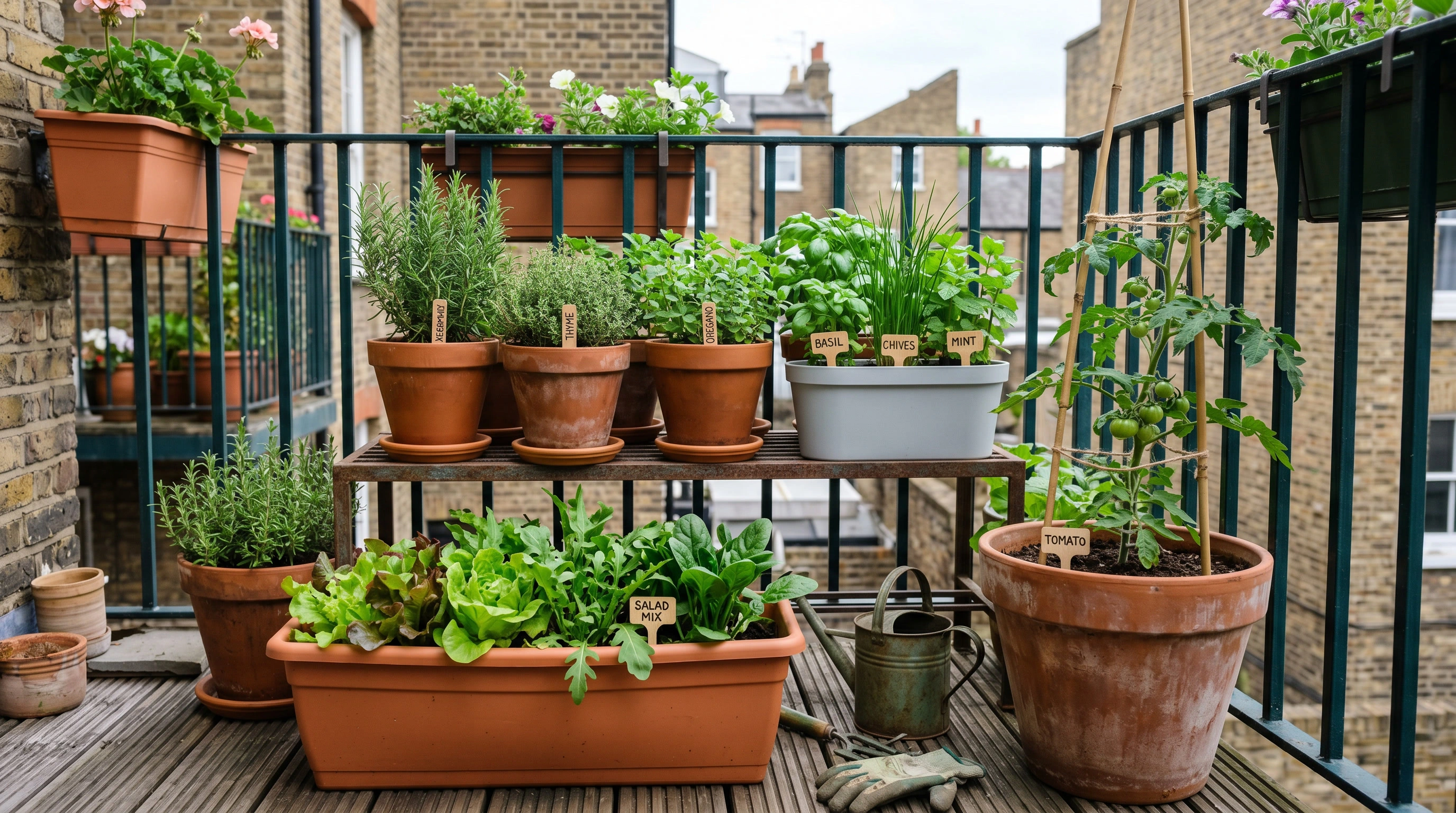
Parsley, chives and mint are among the more forgiving herbs. They still need good light, but they can cope with less direct sun than basil, rosemary or thyme.
Basil is a warm-season herb. It grows best on a warm, bright sill or sunny sheltered balcony from late spring into summer. In winter, it often struggles in UK homes.
Rosemary, thyme and sage usually prefer strong light and airflow. They are often happier outdoors than on a dim kitchen sill. For a full herb guide, read Best Herbs to Grow on a Windowsill in the UK.
Vegetables by light level
Leafy vegetables are the best place to start if your light is limited. Salad leaves, rocket, spinach, mizuna and pea shoots can give useful harvests without needing the strongest sun.
Fruiting vegetables need more. Tomatoes, chillies, peppers and aubergines need enough sun and warmth to flower and ripen fruit. They are much better suited to sunny balconies or patios than shaded sills.
Root crops sit in the middle. Radishes can be quick and forgiving, while carrots and beetroot need more depth and steadier conditions.
How to check your own space
Spend a day watching the growing spot before buying plants. Note when direct sun first reaches it and when it leaves. Repeat this in a different season if you can, because winter and summer light are very different.
Look for hidden blockers: balcony overhangs, railings, neighbouring buildings, deep window frames, blinds, net curtains and nearby trees. All can reduce useful light.
If a plant leans strongly toward the window, becomes long and weak, or grows slowly despite sensible watering, low light may be the problem.
Best choices for lower light
If your space is bright but not sunny, try:
- Parsley
- Chives
- Mint
- Salad leaves
- Rocket
- Spinach
- Pea shoots
- Microgreens
- Radishes as a quick experiment
If you have a shaded balcony, read Best Vegetables for North-Facing Balconies in the UK.
Best choices for sunny spaces
If your balcony or patio gets strong summer sun, you can try:
- Basil
- Dwarf beans
- Strawberries
- Compact tomatoes
- Chillies
- Mediterranean herbs
- Salad leaves with careful watering
Sunny spaces give more options, but they also dry pots faster. If the space is very hot, leafy crops may bolt or wilt unless watered consistently.
A simple light-matching plan
If you are unsure, make three lists before buying anything. First, write down the spots you can actually use: kitchen sill, bedroom sill, balcony floor, patio edge or doorstep. Second, note roughly how much direct sun each spot receives on a clear day. Third, match crops to the best spot rather than spreading pots everywhere.
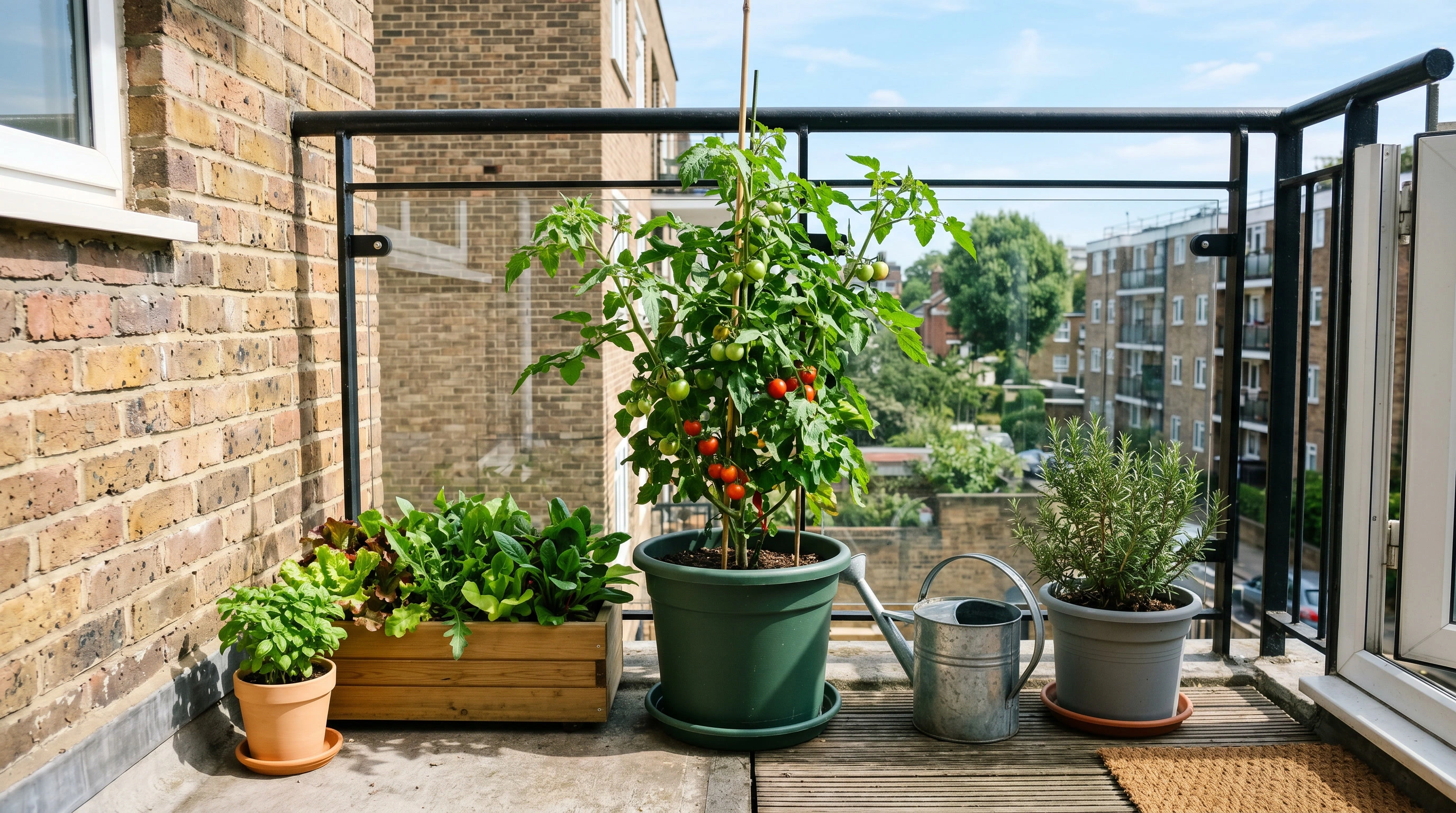
For many UK renters, the most useful setup is mixed. A sunny outdoor pot can hold tomatoes, beans or basil in summer. A bright windowsill can hold parsley, chives or seed trays. A shadier corner can be reserved for mint, salad leaves or a pot you move into better light later.
Do not judge the space on one grey day. The UK has plenty of dull weather, but orientation still matters. A south-facing balcony on a cloudy day is usually still a stronger growing position than a north-facing sill blocked by nearby buildings.
Seasonal changes in UK light
Summer light can make a small space feel far more capable than it is in February. From late spring to early autumn, bright balconies and patios can support more ambitious crops. In winter, most edible plants slow down, even indoors.
This is why the same windowsill may grow basil reasonably well in July but struggle with basil in November. It is not necessarily your fault or a watering problem. The plant may simply be receiving too little light and warmth for active growth.
Use winter for lower-expectation crops such as pea shoots, microgreens or hardy herbs that are already established. Use spring and summer for crops that need stronger light. The Year-Round Balcony Planting Calendar for the UK gives a practical seasonal rhythm.
Common mistakes
The biggest mistake is starting with tomatoes or basil in a dim space. They are popular, but they are not forgiving in low light.
Another mistake is assuming windowsill light is the same as outdoor light. Glass, orientation and nearby buildings all reduce growing conditions.
Finally, do not treat shade as failure. Shade simply changes the crop list. You can still grow useful herbs and leaves.
If low light makes you consider different containers, seed-starting kit or a small grow light, see the small-space gardening kit list before buying anything.
FAQ
Can herbs grow without direct sunlight?
Some can grow in bright indirect light, especially parsley, chives and mint. Basil, rosemary and thyme usually need stronger light.
Do vegetables need full sun?
Fruiting vegetables usually need plenty of sun. Leafy vegetables can cope with less direct sun and are better for shaded small spaces.
Is a north-facing windowsill enough for herbs?
Often it is difficult, especially in winter. Try pea shoots, microgreens, parsley or chives in the brightest spot.
Can too much sun be a problem?
Yes. Small pots can dry quickly in strong sun, and salad leaves may bolt in hot weather. Watering and pot size matter more in sunny spaces.
Related guides
- Beginner’s Guide to Small-Space Gardening for UK Renters
- What Can You Grow Without a Garden in the UK?
- Best Herbs to Grow on a Windowsill in the UK
Next step
If you know your light level but not your crop list yet, read What Can You Grow Without a Garden in the UK? next.