Buying an indoor compost bin sounds simple, but the wrong one can turn into a smell, mess, and storage problem fast. In a small flat, good choices are less about marketing features and more about fit: size, cleaning ease, seal quality, and your actual routine.
This guide is a buyer-style comparison framework. It does not claim hands-on testing of every model, and it focuses on the practical details worth comparing before buying.
Start with your use case
Before comparing models, decide what the bin is for:
- Daily food-scrap caddy before council collection
- Temporary storage before bokashi/wormery processing
- Short-term collection before external compost drop-off
If you only need short-term storage, a simple sealed caddy may be better than a larger specialist bin.
What to compare before buying
1. Capacity
Too small means constant emptying. Too large means scraps sit too long.
For many flats, compact-to-medium capacity is the practical range, especially when emptied several times a week.
2. Lid seal and odour control
Look for:
- Tight-fitting lid
- Replaceable filter system (if used)
- Easy-open design that still seals well
Weak seals are one of the most common buyer complaints.
3. Cleaning and maintenance
A bin that is hard to clean becomes unpleasant quickly. Prefer:
- Smooth interior surfaces
- Minimal awkward corners
- Parts that can be washed easily
4. Footprint and placement
Measure your available space first. In small kitchens, placement matters more than advertised capacity.
5. Build quality
Check common buyer feedback for hinge durability, lid integrity, and whether handles loosen over time.
A simple comparison matrix
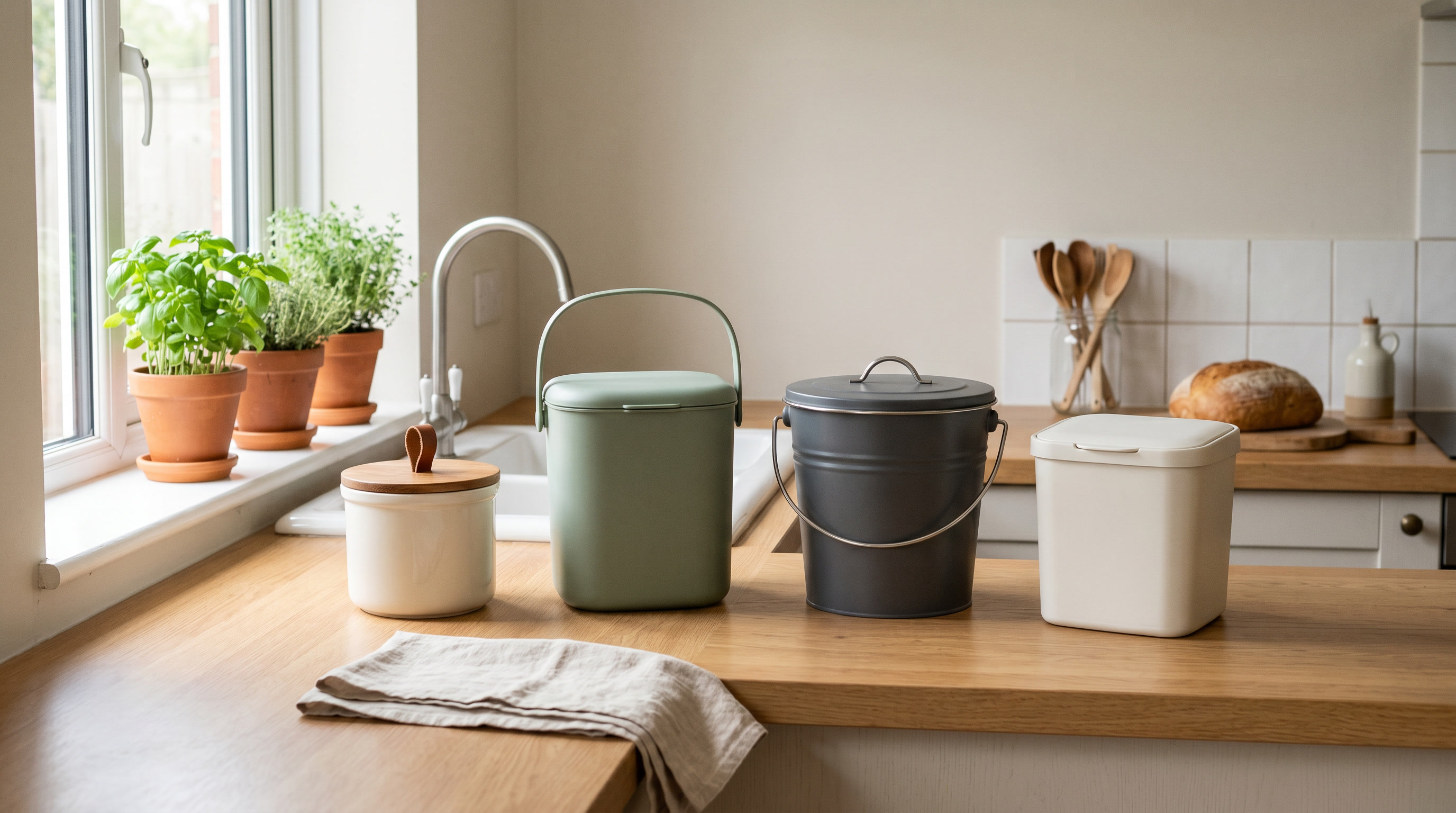
| Bin style | Best for | Watch-outs | Maintenance level |
|---|---|---|---|
| Compact countertop caddy | Very small kitchens, frequent emptying | Fills quickly | Low |
| Medium lidded caddy | Most flats | Needs regular cleaning | Low to medium |
| Filtered caddy | Users sensitive to odour | Filter replacement cost | Medium |
| Large indoor bin | Higher food-scrap volume | Space + overfilling risk | Medium |
Use this matrix to shortlist, then compare specific product pages.
Indoor composting options to compare
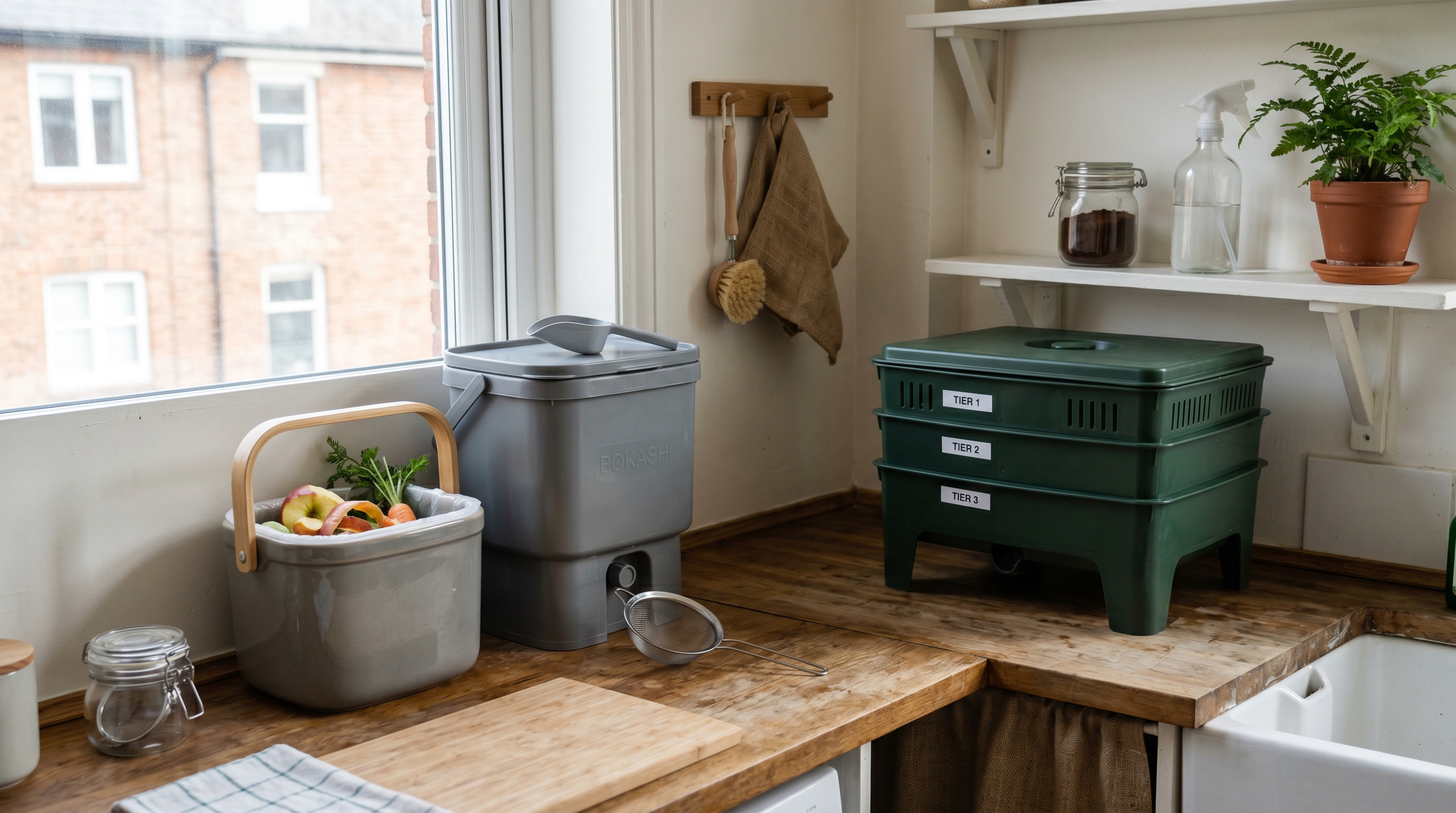
Before buying, decide whether you need a simple caddy, a bokashi system, or a larger indoor composting option. The small-space gardening kit list covers composting kit alongside other beginner supplies.
- Kitchen compost caddy: Compare options on Amazon
- Bokashi bin: Check options on Amazon
- Indoor compost bin: View similar products on Amazon
Red flags before purchase
- No clear dimensions listed
- Sparse maintenance instructions
- Repeated buyer feedback about leaks or weak hinges
- Design that is difficult to clean around seals
- Product descriptions that overpromise odour-free use without upkeep
If basic practical details are missing, skip it.
How this differs from composting strategy
This article is about choosing a bin, not choosing your full composting method.
For method selection, use Composting in a Flat: What Are the Realistic Options?. Choose the system first, then buy a bin that supports it.
Renter-friendly buying cautions
Choose a bin you can manage cleanly in shared or compact spaces. Avoid oversized setups that are hard to move, hard to clean, or likely to leak onto worktops and floors.
Practical checklist:
- Stable base
- Easy carry to empty point
- Fits under sink or on designated counter area
- Works with liners or cleaning routine you will actually follow
Common mistakes
Buying for ideal habits, not real habits
Choose for your busiest week, not your best week.
Choosing oversized bins in tiny kitchens
Larger is not always better in flats.
Ignoring cleaning effort
If cleaning is awkward, usage drops.
Treating filters as a full solution
Filters help, but regular emptying and cleaning still matter.
FAQ
Do I need a special indoor compost bin?
Not always. A well-sealed, easy-clean caddy can be enough for many people.
What size is best for a flat?
Usually compact to medium, depending on household food-scrap volume and emptying frequency.
Are expensive models always better?
No. Practical fit and maintenance design matter more than price alone.
Should I buy a bin before choosing a composting method?
It is usually better to choose your method first.
Can one bin solve all odour issues?
No. Good routine is still essential.
Related guides
- Composting in a Flat: What Are the Realistic Options?
- Cheap Ways to Start Gardening as a Renter
- Container Gardening for Beginners: A UK Small-Space Guide
Next step
Shortlist two or three bins that match your actual kitchen footprint, then compare cleaning design and buyer feedback before buying.