Grow lights can be useful, but they are not a requirement for everyone growing herbs indoors. Many UK beginners buy a light too early, then still struggle because the real issue is container size, watering, or overcrowded supermarket herbs.
This guide helps you decide when a grow light is genuinely worth it, when daylight is enough, and how to keep things simple in a flat, rented home, or other small-space setup.
When you probably do not need a grow light
You can often skip grow lights if:
- You have a bright south or west-facing windowsill
- You are growing mainly from spring to early autumn
- You are growing forgiving herbs like chives, parsley, and mint
- You can rotate pots and avoid crowding
Before buying lights, make sure the basics are solid:
- Correct container size and drainage
- Sensible watering routine
- Enough spacing between plants
- Crop choices that match your window
If those are not in place yet, use Windowsill Herbs for Beginners: What Works Indoors? and How to Keep Supermarket Herbs Alive for Longer first.
Signs a grow light might help
A light is worth considering when several of these happen together:
- New growth is weak and stretched (leggy)
- Plants lean hard toward the glass
- Growth slows dramatically even with steady care
- Basil and coriander repeatedly fail in darker months
- You only have one dim growing spot
One weak week is not enough evidence. Look for a pattern over two to three weeks.

Which herbs benefit most
Usually most helpful with lights
- Basil
- Coriander (especially for steady indoor sowings)
- Dill
- Mixed seedlings started in low-light months
Usually less urgent
- Chives
- Parsley
- Mint (in its own pot)
These can still appreciate extra light in winter, but they are often more forgiving.
Simple grow light setup for beginners
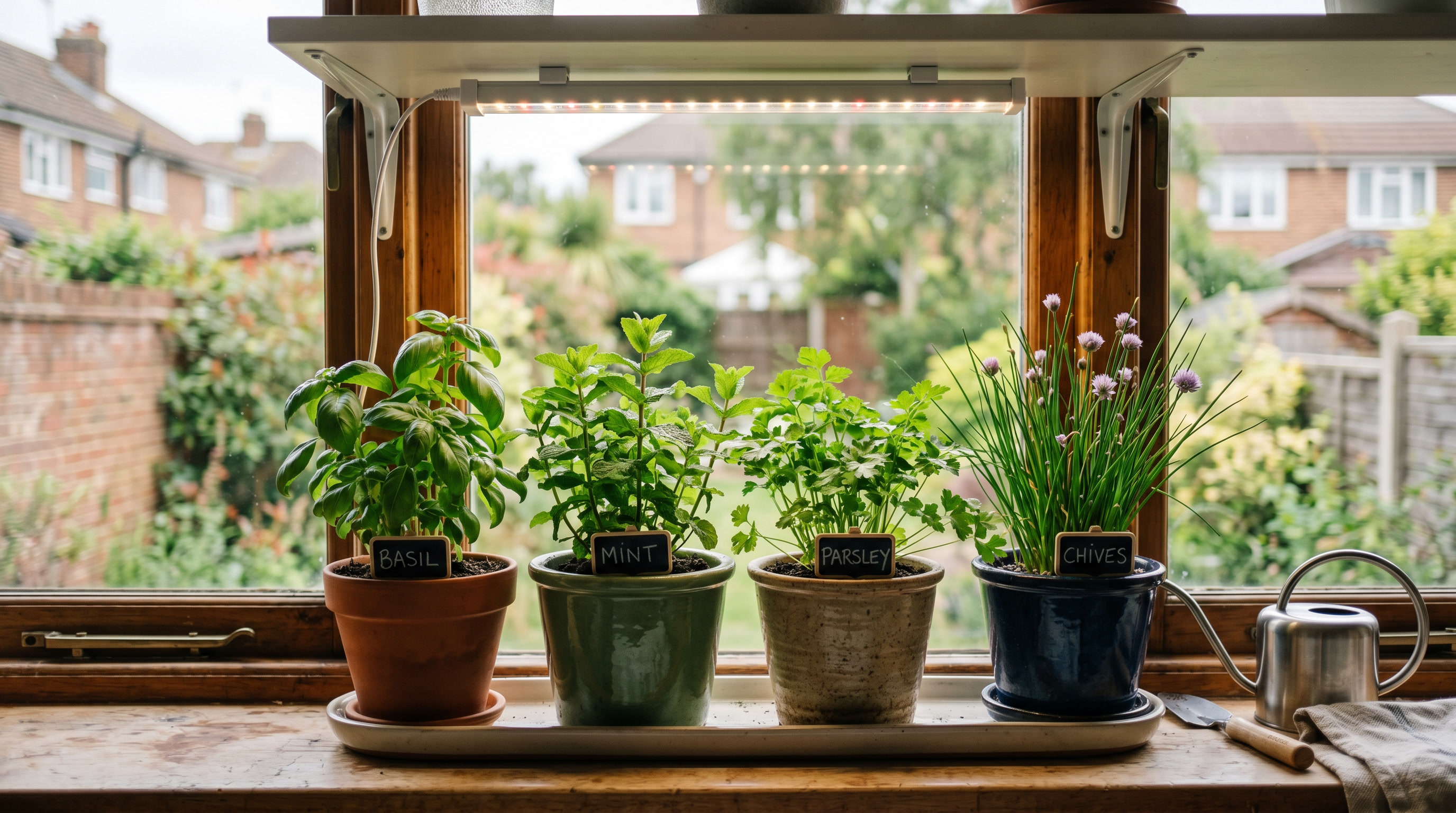
You do not need a complex system. A practical beginner setup is:
- One compact LED grow light bar or small panel
- A stable shelf or windowsill station
- A timer plug
- Herb pots with drainage and trays
Keep the setup tidy and reachable. If the light is awkward to adjust, people stop using it.
Grow light options to compare
Only compare grow lights once you are confident light is the real issue. A small LED light or clip-on light may help a few herb pots, but it should fit your shelf, cable setup and watering routine safely. For a wider beginner equipment overview, see the small-space gardening kit list.
- Small LED grow light: Compare options on Amazon
- Clip-on grow light: Check options on Amazon
Timing and routine (without getting too technical)
A workable routine for many herb growers is:
- Run the light for part of the day on a timer
- Keep a regular on/off pattern
- Adjust duration gradually if herbs still look weak
You do not need perfect numbers on day one. Consistency matters more than chasing exact settings.
Positioning and safety in flats
Lighting should improve your setup, not create risk.
Keep electrical equipment away from watering splash zones, secure cables so they are not trip hazards, and follow product safety instructions. Do not run trailing cables through walkways or wet areas.
Practical renter-friendly habits:
- Use removable clips/stands, not permanent fittings
- Keep power strips raised and dry
- Leave airflow around lights
- Turn equipment off before major watering or rearranging
Common mistakes
Buying a light before fixing basics
If roots are cramped or compost stays soggy, light alone will not solve weak growth.
Overcrowding herb pots
Even with a light, crowded herbs compete and decline fast.
Running lights inconsistently
Random timing gives random results. Use a timer.
Using lights too far from plants
If the light is too distant, improvement may be minimal.
A realistic UK seasonal approach
In spring and summer, many homes can rely mainly on daylight for herbs. In autumn and winter, some growers use lights to keep selected herbs productive, not to force summer-level growth from everything.
That expectation shift matters. Even with lights, winter growth can be slower.

FAQ
Can I grow herbs indoors in the UK without grow lights?
Yes, especially in brighter windows from spring to early autumn.
Are grow lights only for advanced growers?
No. Beginners can use them, but only when they solve a clear light limitation.
Which herb most often needs extra light indoors?
Basil is one of the most common.
Should lights replace window light?
Usually no. Most setups use them as supplement, not full replacement.
What should I do before buying a light?
Fix pot size, drainage, spacing, and watering first.
Related guides
- Beginner’s Guide to Small-Space Gardening for UK Renters
- Container Gardening for Beginners: A UK Small-Space Guide
- Windowsill Herbs for Beginners: What Works Indoors?
- Growing Basil Indoors: A UK Windowsill Guide
- How Much Sunlight Do Herbs and Vegetables Need?
Next step
If your herbs are struggling now, first confirm whether the issue is light or setup basics. Use How to Keep Supermarket Herbs Alive for Longer and then decide if supplemental light is still needed.