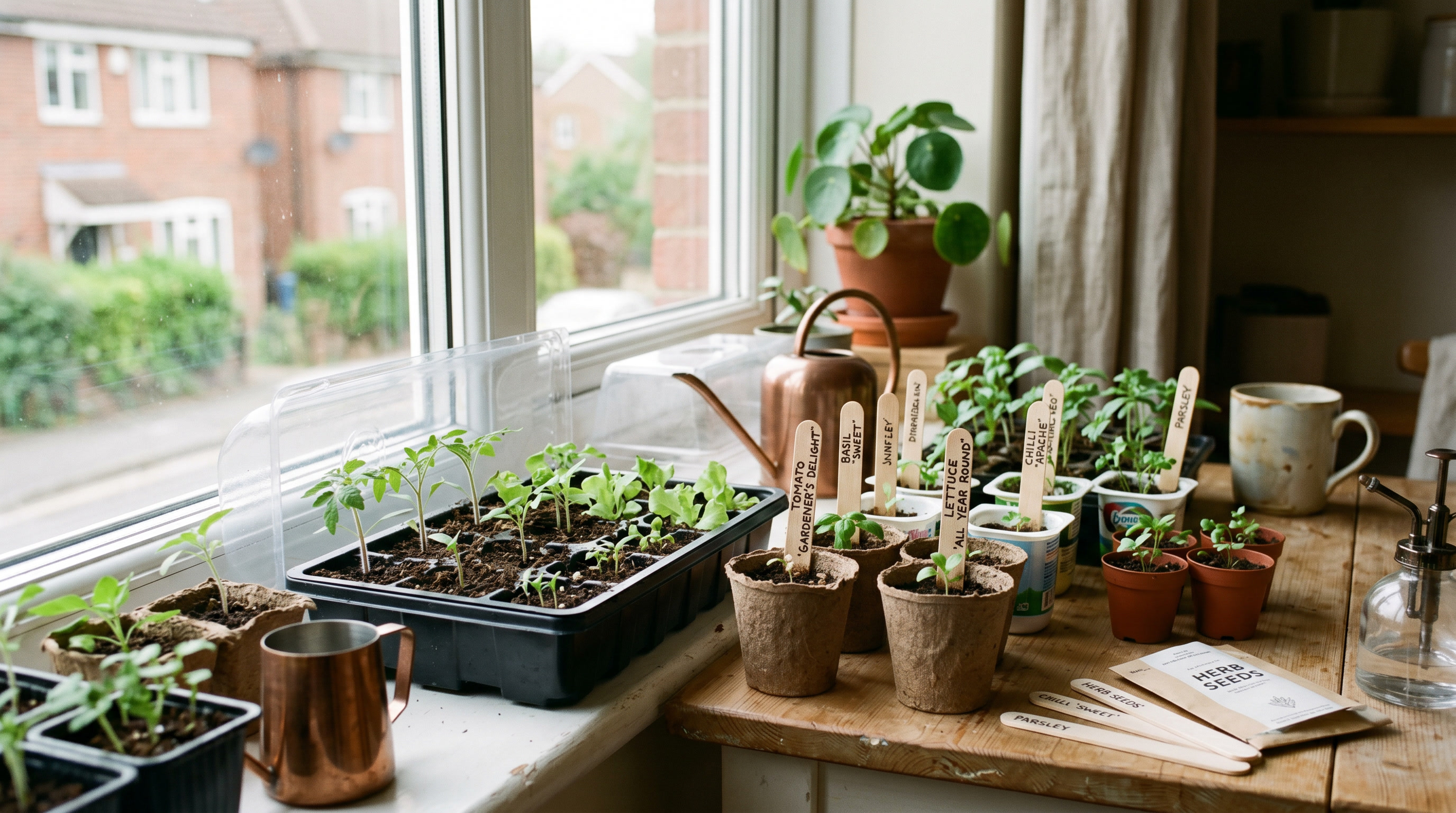
You do not need a greenhouse to start seeds. Many herbs, salad leaves and compact vegetables can be started indoors on a bright windowsill. For UK renters and flat dwellers, indoor seed starting is a useful way to grow cheaply, learn timing and avoid buying too many young plants.
The challenge is light. Indoor seedlings can become weak and stretched if they do not get enough brightness. The aim is to start the right seeds at the right time, not turn every windowsill into a nursery.
If you want a shorter troubleshooting companion to this guide, see Starting Seeds Indoors: Beginner Mistakes to Avoid.
Best seeds to start indoors
Good beginner choices include:
- Pea shoots
- Microgreens
- Salad leaves
- Basil
- Coriander
- Chives
- Parsley
- Dwarf beans
- Compact tomatoes if you have strong light
If you are unsure what to grow, read What Can You Grow Without a Garden in the UK?.
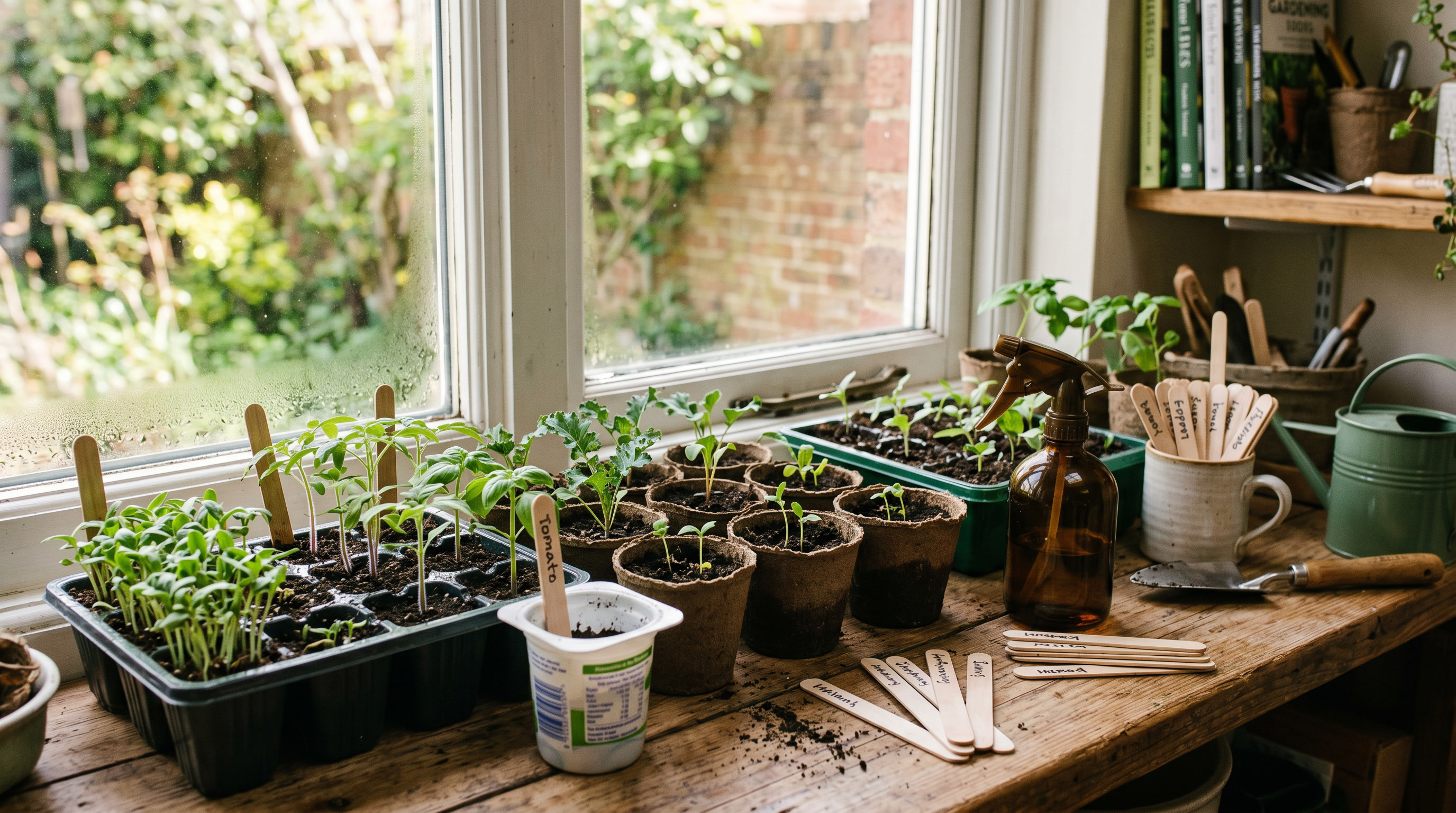
What you need
Keep the kit simple:
- Seed trays, modules or small pots
- A tray to catch water
- Compost
- Labels
- Seeds
- A gentle way to water
You do not need a heated propagator for basic crops. You do need cleanliness, light and careful watering.
Useful seed-starting kit
If you want a tidier setup than loose pots on a sill, compare compact seed-starting kit that fits your actual windowsill or tabletop. The small-space gardening kit list gives a wider overview of what is useful and what can wait.
- Seed trays with lids: Compare options on Amazon
- Windowsill propagator: Check options on Amazon
- Spray bottle: View similar products on Amazon
- Plant labels: Check options on Amazon
Containers for seed starting
Small pots, module trays, mushroom trays and food-safe tubs can work if drainage is managed. For microgreens and pea shoots, shallow trays are fine. For seedlings that will be moved on, modules make transplanting easier.
If reusing household items, read Upcycling Household Items into Planters first.
Compost
Seed compost is useful because it is fine and low in nutrients. For many beginner crops, sieved or fine peat-free multipurpose compost can also work.
Break up lumps before sowing small seeds. Large chunks make it harder for tiny seedlings to establish.
Sowing indoors
Fill the container, firm gently, water the compost, then sow. Follow seed packet depth guidance. Very small seeds are often sown shallowly. Larger seeds can be pushed deeper.
Label everything. Seedlings look similar at first, and mystery trays are less fun than they sound.
Sow fewer seeds than you think. Crowded seedlings compete for light and become harder to water.
Light after germination
Seeds may germinate in warmth, but seedlings need light as soon as they emerge. Move them to the brightest windowsill you have.
If seedlings become long, pale and leaning, they need more light. Rotate trays every few days so they do not lean too strongly.
Read How Much Sunlight Do Herbs and Vegetables Need? for more on light levels.
Watering seedlings
Seedlings need steady moisture, not soggy compost. Water gently so seeds do not wash away. Bottom watering can work: add water to the tray briefly and let compost draw it up, then remove excess.
Overwatering is common indoors. If compost stays wet and seedlings collapse, conditions may be too damp and low-light.
When to pot on
Seedlings need potting on when they have enough roots and true leaves to handle. Do not rush tiny seedlings into oversized pots. Move them gradually.
Pea shoots and microgreens do not need potting on because you harvest them young. Salad leaves can often stay in their container if sown thinly.
Hardening off
Plants started indoors need adjusting before living outside. Put them outdoors for short periods in mild conditions, then bring them back in. Gradually increase time outside over several days.
Do not put tender seedlings straight onto a cold, windy balcony.
Timing for UK renters
Indoor seed starting is tempting in January and February, but many edible crops do better when started later with stronger light. Early sowing can fill a flat with weak seedlings before outdoor conditions are ready.
For beginners, March and April are often more useful months for hardy leaves, herbs and seed trays. Tender crops such as tomatoes, chillies and basil need more warmth and light, and they should not be rushed onto cold balconies.
If storage space is limited, sow in small batches. It is easier to care for one tray of healthy seedlings than six trays that all need light, water and potting on.
A first indoor seed project
Start with pea shoots or salad leaves before trying tomatoes. They grow quickly, do not need months of indoor care, and show you how your windowsill behaves.
For pea shoots, use a shallow tray with drainage, sow thickly, keep moist, and harvest the shoots young. For salad leaves, sow more thinly and give the plants space to develop. Both crops teach watering and light without needing a greenhouse.
Once that works, try basil in late spring or dwarf beans for moving outdoors. Add tomatoes only when you have a sunny outdoor space and enough room for larger pots.
Dealing with leggy seedlings
Leggy seedlings are tall, pale and weak because they are stretching for light. Once seedlings become badly leggy, they rarely become as sturdy as plants grown in good light from the start.
Move trays to the brightest safe windowsill as soon as seedlings appear. Rotate them regularly. Remove covers after germination so seedlings do not sit in warm, dim, humid conditions.
If seedlings are only slightly stretched, you may be able to pot them on carefully and improve the light. If they are collapsing, it is often better to resow a smaller batch at a better time.
Potting on without taking over the flat
Potting on means moving seedlings into larger pots. It is useful, but it can quickly take up space. Before sowing, ask where the plants will go once they grow bigger.
Use modules or small pots for crops that need transplanting. Keep trays labelled. Do not pot every seedling on just because it germinated. Choose the strongest plants and compost the rest. This feels harsh, but overcrowded seedlings usually perform worse.
What not to start indoors
Some crops are not worth starting indoors in a flat unless you have a clear reason. Large climbing crops, courgettes and many root vegetables can become awkward quickly. Direct sowing outdoors or choosing smaller crops is usually simpler.
For small-space growers, seed starting should support the garden, not overwhelm the home.
A simple month-by-month approach
In late winter, keep seed starting minimal unless you have excellent light. Try microgreens or pea shoots rather than filling the windowsill with tender vegetables.
In March and April, sow hardy herbs, salad leaves and a few experimental crops. This is a good time to learn watering and light without the pressure of summer heat.
In late spring, start or buy warm-season plants if you have somewhere suitable for them outdoors. Basil, dwarf beans and tomatoes need better warmth and light than winter windowsills provide.
In summer, sow small batches of salad leaves in cooler spots and use the windowsill for backup herbs or quick shoots. In autumn, return to pea shoots, microgreens and slower leafy crops.
Cleaning trays and avoiding clutter
Indoor seed starting can become messy. Keep one tray for potting, wipe windowsills after watering, and wash reused containers before storing them. Compost spills are easier to manage immediately than after they dry into corners.
Do not keep every empty yoghurt pot just in case. Save a small number of useful containers and recycle the rest. A tidy seed setup is easier to restart and less likely to annoy housemates.
When seedlings are ready for real containers
Seedlings are ready to move when they have true leaves, enough roots to hold compost together, and a sensible place to go. Moving too early can damage them. Waiting too long can leave them starved and tangled.
Prepare the next pot before lifting seedlings. Water first, handle by leaves rather than delicate stems where possible, and settle them gently into fresh compost.
For outdoor crops, remember that potting on is not the same as moving outside permanently. Tender plants still need gradual hardening off.
Best first seed choices
For a first indoor sowing, choose pea shoots, microgreens, salad leaves or basil in warm months. These seeds give quick feedback and do not require months of indoor care. Chives and parsley are useful too, but they are slower and need more patience.
Leave demanding crops until you have seen how bright your windowsill really is. If seedlings lean hard toward the glass or become pale, your space may be better for shoots and herbs than long-term vegetable starts.
A small-space rule
Only sow what you can pot on, harden off or harvest. This single rule prevents most indoor seed clutter. A tray of twenty tomato seedlings sounds exciting until you have nowhere sunny to put twenty tomato plants.
Small batches suit renters better because they are easier to move, water and tidy.
They also make failure less discouraging. If one tray struggles, you can resow at a better time instead of losing a windowsill full of seedlings.
For renters, this flexibility is valuable. You can pause seed starting before travel, restart after a move, and keep the whole setup small enough to clear away quickly.
That is the real advantage of indoor seed starting in a flat: it can stay small, cheap and seasonal instead of becoming a permanent nursery.
Once you know your brightest sill, repeat the crops that behaved well there.
Common mistakes
The biggest mistake is starting too early. Weak late-winter light can produce poor seedlings. Another is sowing too thickly. A third is leaving seedlings in warmth after they emerge but not giving enough light.
Indoor seed starting is useful, but it works best when timed sensibly.
FAQ
Can I start seeds on a windowsill?
Yes, if the windowsill is bright enough. Seedlings need good light after germination.
Do I need a propagator?
No, not for many beginner crops. Warmth helps germination, but light after germination matters more.
Why are my seedlings leggy?
They are usually stretching for light. Move them to a brighter spot and avoid sowing too early or too thickly.
Can I start tomatoes indoors?
Yes, but tomatoes need strong light and warmth. They are more demanding than salad leaves or herbs.
What seeds are easiest indoors?
Pea shoots, microgreens, salad leaves, basil in warm months, coriander and chives are good starts.
Related guides
- Beginner’s Guide to Small-Space Gardening for UK Renters
- Growing Salad Leaves in Containers in the UK
- Best Herbs to Grow on a Windowsill in the UK
- Starting Seeds Indoors: Beginner Mistakes to Avoid
Next step
If you want a forgiving first seed project, try Growing Salad Leaves in Containers in the UK.